3 Forces at Play for HR 2026 and What to Do About Them:

If there’s one thing that HR can handle, it’s a challenge. This last year has certainly tested so many teams.
AI. Budget cuts. Layoffs. Skills. Compensation. Inflation. Talent.
Employees looking at us like, “Please tell me what’s next.”
And most HR leaders thinking, “I wish I knew.”
We’re facing an unprecedented collision of forces from things like AI adoption, layoffs and flattening organizations, shrinking budgets, stalled skill development, and a workforce desperate for clarity.
⛰️ Everywhere I look there’s a challenge to be overcome.
And honestly, we cannot possibly predict (nor should we be expected to) every challenge, skill or role coming our way.
The pace of change is too fast, and the stakes are much too high.
But as much as possible I want to help prepare you for what’s to come!
Here are 3 forces that I think will be in play 2026:
✅ Retention
✅ Manager effectiveness
✅ Practical reskilling & upskilling
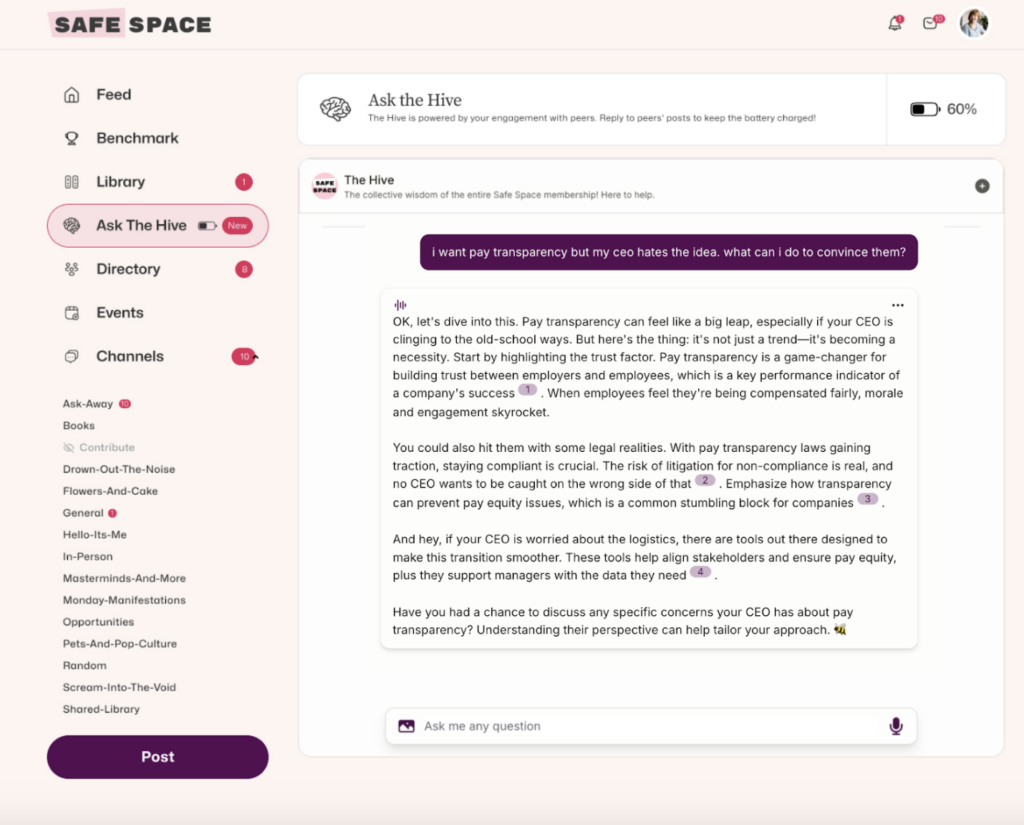
Let’s break down what’s actually happening and what HR can do next.
And as a special bonus: I have a REAL LIFE case study to share with you! Because theory is never enough, I need to see things in practice.
Here’s the 411: At a tech company in Austin, automation wasn’t just changing workflows – it was actually reshaping the entire workforce. They had a quality assurance team of more than 150 employees and their roles were evolving quickly as testing became more automated and embedded into engineering.
The leadership faced a decision every HR leader has faced: reduce headcount or rethink how talent moves inside the business.
They chose the second.
📝 I’m going to share why this case study matters and what you can learn from this real life example!
#1: Retention:

A few years ago, it felt like every HR conversation revolved around engagement.
Now? Not so much…
The labor market is weird right now, soft for some, brutal for others, but the truth remains:
top talent will always have options, and they will be poached.
Retention has become a defining force this year and will be next because leaders are finally facing reality:
People don’t stay because they’re engaged. They stay because they see a future.
That future is built through:
✅ Skills
✅ Clarity
✅ Internal mobility.
BTW: Internal mobility is still the most cost-effective sourcing strategy companies have, yet few use it well… 2026 is the perfect time to change that,
Because when employees feel stalled, they’ll disengage. And when they see a path, they stay.
And in a year of hiring freezes and tightening budgets, mobility isn’t an HR initiative, it’s actually a business survival strategy.
But mobility fails without capability. People can’t move into new roles if they aren’t trained for them.
HR cannot, and should not be expected to, carry the full burden of anticipating every emerging skill in an AI-shaped world. Reskilling at this scale must be owned across the business.
📣 Which is why having an upskilling and reskilling solution that actually works is critical, especially when top performers are an evergreen retention risk.
📝 That’s exactly the conclusion the tech company from the case study came to: as automation reshaped demand for QA roles, HR and engineering leaders had to make retention a company-wide priority.
Here’s what they did: QA professionals were offered a six-month applied engineering program with real projects, code reviews, and mentorship from internal engineers. This turned career pathing into a real thing instead of a promise made!
The company partnered with Chegg Skills to operationalize an applied engineering pathway at scale.
When reskilling led directly to new roles, retention followed. Retention followed mobility rather than engagement tactics. Would you look at that.
Don’t make the mistake of simplifying retention to an engagement problem!
# 2: The Manager Effectiveness Crisis

I’ve joked for years that I’m just a girl standing in front of corporate America begging it to train its managers but I think the joke is officially getting stale…
Managers have been thrown into roles they weren’t ready for, especially this past year.
Post-layoff reorganizations have shifted responsibilities overnight. Great individual contributors have suddenly become people leaders. Some managers are leading twice the team & workload with half the clarity.
🚨 Gartner’s 2026 HR priorities spotlight a shift toward “now-next” talent strategies – balancing today’s performance pressure with long-term workforce capability. 🚨
And manager effectiveness is the bridge that makes that work – or snaps under pressure.
Here’s why it matters more than ever:
- Managers are the single biggest driver of retention and performance
- Most managers don’t feel equipped to coach, develop, or lead people at scale
- You can’t expect managers to identify rising internal talent when they don’t even feel grounded in their own roles
- Internal mobility dies in teams where development is unclear or unsupported
📝 In the example of the org from the case study this tension of manager effectiveness became impossible to ignore.
Because suddenly Engineering managers weren’t just overseeing delivery, they were also coaching, reviewing work, and mentoring QA professionals retraining into engineering roles.
And internal mobility didn’t live in some HR systems, it lived in daily standups, code reviews, and manager feedback loops.
In other words, if your manager layer is strained and if you don’t fix it, everything kinda goes to sh*t.
Upskilling managers isn’t optional anymore. It’s foundational.
#3: Practical Upskilling & Reskilling:

Here’s the quiet crisis no one wants to admit: work moved forward, but our skills didn’t.
Woof.
AI sped everything up, and employees (even HR) are left thinking, “Am I already behind?”
That uncertainty? It’s exhausting. And it’s showing up as low energy, slipping performance, and people checking out.
Upskilling and reskilling are how you fix this, not by overwhelming people with more tools, but by building real capability.
Because when people know how to do the work of the future, they stop panicking and start performing.
The secret code: capability → confidence → energy.
But here’s the thing to remember… it’s not all linear.
Capability might inch up, confidence can spike or crash depending on the day, and energy fluctuates with everything else happening at work.
📝 For that tech company from the case study, this showed up in a very real way. QA professionals weren’t learning “about” engineering, they were becoming engineers. They were writing code, submitting work through GitHub, and receiving feedback in real time.
But in the age of AI, one pattern stands out: People who only build technical skills won’t be the winners.
The real advantage goes to those who invest in both technical and durable (soft) skills.
🛠️ Technical skills have a shelf life of around 2 years. Durable skills are what help you navigate complexity and 2026 is shaping up to be one massive complex problem.
Fun fact: durable skills represent SIX out of the top ten skills desired by leaders.
And guess what? 61% of workers think it’s their employer’s responsibility to help them learn new skills relevant to their jobs.
This isn’t a “learning culture” conversation anymore. It’s an expectation.
📝 At the start of their program, fewer than one-third of QA professionals passed engineering interviews. By the end of the program, every participant who completed it passed – and was offered a role.
The bottom line: the most effective upskilling + reskilling strategies don’t just teach technical + durable skills.
They build confidence.
They unlock mobility.
They change behavior.
📝 That tech company chose not to wait. Instead of accepting attrition as inevitable, leadership invested in building capability from within. Redesigning roles, manager support, and training together.
And they couldn’t do it without a strong partner.
Chegg Skills works with organizations that need real workforce movement – not surface-level training initiatives. They partner with HR and business leaders to retain strong performers, fill critical roles, and build skills faster than job descriptions can change.
Chegg Skills leads with applied learning – not just content.
In a world where AI can generate infinite information, that doesn’t mean your workforce is suddenly more capable.
Content is cheap and everywhere now. Skill is not.
Chegg Skills is a learning company, not a content company. Programs are grounded in learning science, not guesswork. That means training is built around how working adults actually develop skills: through practice, feedback, and application in real work environments.
Their programs turn learning into real role movement – so employees don’t just learn; they grow into what’s next.
Because in 2026, the risk isn’t access to content. It’s a workforce surrounded by information – and still unprepared.
📚 Inside the reskilling strategy that actually worked: Read the case study behind how the team reskilled QA into engineering roles including outcomes and lessons HR leaders can apply.
We’re All in This Together:

HR teams cannot solve our biggest challenges alone. As the cast of HSM would say, we’re all in this together.
The pressure to retain talent, develop managers, and reskills teams isn’t letting up in 2026. And finding partners who can meet your organization where it is going to matter more than ever.
This is where Chegg Skills fits.
Chegg Skills supports organizations with skills-first programs that are designed around real roles, real pathways, and real outcomes, NOT surface-level training or one-off initiatives.
And the results speak for themselves:
✅ 76% of Chegg Skills graduates are still with their same employer six months after completing the program
✅ 65% are still employed with their sponsoring company at least one year later.
✅ Across industries, Chegg Skills grads stay at rates that are 9 percentage points higher than comparable employees (56%) at these employers
If 2026 planning is already keeping you up at night, you’re not alone.
If you want to pressure-test what a skills-first strategy could actually look like inside your organization – the Chegg Skills team would love to talk.
No pitch. Just a real conversation.
Skills are the foundation of everything, so what are you waiting for?