There are a few hiring managers out there who have gotten on my very last nerve, if we’re keeping it 💯.
Still, I feel like I need to speak in their defense real quick…
Because I’ve learned they’re actually victims of the same haunted system HR is trapped in, except it inconveniences them for like half an hour, and then basically ruins the rest of our week.
Okay, slight exaggeration because it’s spooky season and I’m trying to accommodate the vibes just a little, but you know what I’m talking about!
Here’s a common example: The hiring manager is fully engaged during kickoff, and they wanna hire a candidate ASAP that they’re excited about.
They probably have strong opinions about the ideal candidate, and they’ve even found 30 uninterrupted minutes on their calendar.
Then interviews start and all of a sudden, this person disappears into the fog. 👻
Interview notes arrive through Slack with the detail and emotional depth of “I liked her,” while someone shares feedback during a rando convo you weren’t even there for, then another manager finishes an interview and, 20 minutes later, can’t remember what the candidate said.
Now you’re standing there with an ATS full of tumbleweeds, trying to reconstruct a hiring decision from five separate emails and something someone mentioned in passing.
I can confidently say that stories like these are scarier than any Goosebumps book I ever read growing up, and at this rate, I feel like I’ve dealt with every version of this! You also get:
😱 The hiring manager who forgets their password every single time
😱 The one who treats scorecards like optional homework
😱 The manager who says they’re leaning toward Candidate B but can’t explain why beyond saying they have good energy.
And yes, I have absolutely blamed them.
But after you watch the same mess happen across several teams with completely different managers, you have to wonder whether every hiring manager is somehow terrible in the same way, and that’s pretty unlikely.
At some point, we have to inspect the haunted house they’ve all been walking into.
*Cue the menacing organ music*
So, that’s what we’re here to talk about!
We’re getting into why hiring managers drop out of the process, what they’re dealing with on their side, and how HR ends up absorbing all the work the system should handle.
The Hiring Manager Horror Show HR Knows by Heart

🔥 Gather around the digital campfire for a sec, while I tell you another scary story!
Bonus points if you pretend I’m speaking in a suspenseful voice with a flashlight under my face.
Okay, let’s set the scene:
The interview ended at 2:00. At 2:03, the hiring manager could have documented exactly what happened.
The candidate’s answers were fresh in their mind, and the manager still remembers which examples impressed them and which answers felt a tad flimsy.
Now, it’s 4:47, and you ask them for the candidate scorecard.
“Yep, doing it now!” they tell you.
(Narrator: They were not doing it now.)
The next morning rolls around, so you follow up again.
The manager remembers liking the candidate…probably. They think there was a strong answer about conflict resolution, or maybe that was the person they interviewed Tuesday?
Wait, which candidate worked at the healthcare startup???
Their useful feedback has EVAPORATED into the mist!
😒 HR then absorbs the work the system was supposed to handle.
That turns into sending manual reminders and copying whatever interview notes you have into the ATS.
You might also have to schedule another debrief because the first debrief somehow produced four opinions and zero decisions.
Now, you get to dress up as a human bridge for Halloween, filling the gaps between your hiring managers, tools, process, and candidates!
For lean HR teams, this gets expensive fast.
A recruiter who should be sourcing candidates and optimizing the process becomes a full-time coordination layer, causing decisions to drag, while strong candidates wait around wondering whether anyone at the company knows WTF is happening.
Best believe that candidates notice when interviewers repeat questions, or when the next round takes eight days to schedule.
Every internal disconnect is eventually unmasked. 🧟
Still…blaming the manager feels tempting because they’re the person ignoring your fifth reminder.
But ultimately, the reminder is only necessary because the process already failed!
Your Hiring Manager Didn’t Wake Up Like This

Hiring managers enter the hiring process carrying their actual jobs on their backs!
Their teams are growing, all while work piles up and the role stays empty.
They’re also trying to hit business goals and support employees in between attending interviews as they jump-scare their way onto the calendar.
Then, we hand them software they use like 4 times a year and act surprised when they don’t move through it like a recruiter!
Most hiring technology is built around the daily user.
Recruiters live inside the ATS every day, so of course you know where everything is. You understand the workflows and all the weird little dropdown menus hiding behind another weird little dropdown menu.
In this scenario, think of hiring managers as tourists.
They arrive under time pressure and could get lost as soon as they try to navigate past the login screen.
Some managers also just don’t know how to interview! 😭
They get promoted because they were good at whatever job they were doing before someone gave them direct reports. Then one morning, a calendar invitation appears, and they’re expected to assess another human being with precision.
What questions should they ask? Which skills matter most? How should they separate evidence from personality?
Nobody knows, so they default to hiring on vibes.
Honestly, managers who admit they have no clue worry me waaay less than those who believe they possess a mystical talent for reading people.
Like, sir…you asked whether the candidate was a dog person and then decided she lacked executive presence. It’s time to put the crystal ball away!
📣 Spark Hire recommends defining clear roles, evaluation criteria, responsibilities, and checkpoints before interviews even begin…and gives some great examples of what this actually looks like in practice.
That preparation matters.
A manager can’t assess candidates consistently when “great candidate” has never been clearly defined.
Consider the hiring manager’s experience for a second…are you asking them to make a thoughtful decision, or are you handing them an administrative scavenger hunt and hoping wisdom appears at the end?
Hiring managers feel the same broken process, just from a different angle.
HR gets the cleanup, but managers get confusion and another unfamiliar platform demanding immediate attention.
👻 Same haunted house, different room!
Your System Should Be Doing More Than Possessing Your Calendar
When I say “system,” I don’t JUST mean your ATS. I mean the process you’re running and the tools you’re using to run it.
One without the other is how you end up haunted.
A good hiring system carries the weight people currently absorb:
- It should create clear ownership of hiring responsibilities, so managers know exactly what they need to do and when.
- It should make candidate info easy to find before the interview and feedback easy to submit afterward.
- Everyone should understand what success in the role looks like before the first candidate arrives.
💡 Start with the process the system is built on 💡
Even great hiring software can’t perform an exorcism on a job nobody understands!
So, before you open the role, get painfully clear about the desired outcome:
- What will this person own?
- What would strong performance look like six months in?
- Which skills are required?
- Who provides feedback, and who makes the final decision?
Once you have those answers, you have something real to organize within your chosen platform, and that’s where it earns its keep.
⚙️ Then, let the platform carry it ⚙️
An occasional user should be able to open the ATS and understand what they need to do without attending a 45-minute refresher training.
Feedback forms should be short and sent automatically to hiring managers once the interview is complete, making it easier to complete than to dodge.
Interview questions should already be attached to the role, and reminders should come from the platform rather than a recruiter needing to play the role of someone’s disappointed parent.
Visibility matters too, which means managers should know where a candidate stands and what comes next.
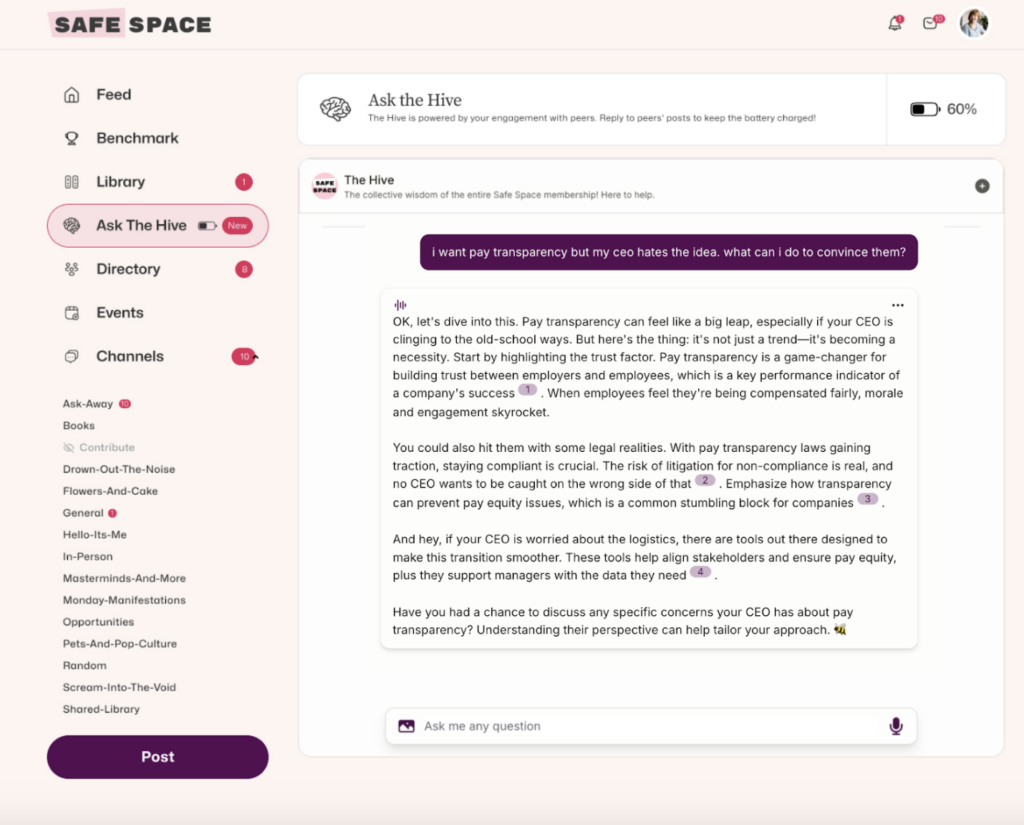
Spark Hire describes hiring collaboration as a shared workflow where teams can centralize communication, collect feedback, coordinate interviews, and maintain visibility throughout the process.
📣 That’s what useful hiring technology should do, right???
It removes the tiny points of resistance that turn participation into homework.
Your system (remember, process + software) needs to make participation feel easier than avoidance, because literally every extra click creates a small decision where hiring managers ask themselves, “Do I finish this now, or do I send the recruiter a Slack message and make it their problem?”
👀 We already know which door many busy people are choosing.
You Fixed Everything, and They’re STILL Ghosting You???
Let’s say you’ve already clarified the role, simplified the workflow, explained responsibilities, and given everyone a timeline…
🙃 But your hiring manager still sends vague, borderline useless feedback through Slack.
What’s your next move here?
First, stop treating participation like a favor they’re doing for HR. Hiring belongs to the business.
The manager is responsible for helping select the person joining their team, and that responsibility includes ✨usable feedback.✨
Set clear expectations during kickoff by explaining what must be completed, where it belongs, and when it’s due.
Connect the behavior to something they care about.
For example, highlight that delayed feedback means delayed decisions, and delayed decisions mean great candidates disappear.
And when that happens, everyone gets to restart the search from the beginning. If that’s not nightmare fuel, I don’t know what is!
Accountability does not and shouldn’t ever require HR to spend eternity chasing adults through Slack.
The tech itself should reinforce that accountability so HR doesn’t have to personally manufacture it every Tuesday.
🫡T hat’s where Spark Hire comes in to save the day!
Spark Hire’s applicant tracking system is built for lean HR and TA teams that need hiring managers working inside the same process without adding more coordination work.
Its collaborative ATS helps you customize hiring workflows per role, automate interview scheduling, and empower managers to leave structured feedback (assisted by an AI notetaker).
All of this means:
- Hiring managers can easily see what needs their attention
- Recruiters can easily see where the process is stuck
- Candidate info stays centralized instead of scattering itself across the galaxy
Spark Hire also gives teams the structure, automation, and visibility to hire with confidence.
Hiring managers will always be part of hiring, so you can keep fighting that reality with reminders and increasingly haunted calendar invitations, or build a process that already assumes they’re busy and only showing up occasionally.
The monster was living in the system. With Spark Hire, you can finally turn on the lights.