egos & dress codes
SUPPORTING PEOPLE WITH

Hi ya party people,
Our fav day of the week has arrived!!! FRI-YAY.
SRY I know I said I would retire that but I couldn't help myself. One weak moment of cringe.
Moving on from that... I spent my birthday week relaxing, celebrating, and opening presents.
Let's just say my friends understand me incredibly well and I was showered with gift cards to buy books. <3333
❤️ I'm feeling really grateful for all the people in my life and the chance to celebrate one more birthday on this floating rock.
AND - I'm feeling especially thankful for you. YES YOU.
You make writing this newsletter so much freaking fun. Thank you for making space in your inbox & life for me. And accepting me as I am, typos and all.
(I'm working on it- I swear!!)
Now, onto today's show. Grab your coffee, unclench that jaw, and let’s get to it!
Got any questions of your own? You can submit them here!
ASK AWAY
👠 dress codes & authorityCopy anchor linkCopied

✍🏾 How do you as a manager get a 60+ male to listen to a 30's female manager, and not go directly to the owner of the store every time he is inconvenienced?
Context: Small independent auto part store. I have 17 years' experience with the company, they have under 2 years. They make numerous mistakes daily, but I cannot say a word because I'm "nit-picking" their flaws. As I see it, their flaws are hurting the business, but I'm not allowed to fix problems as the manager. I want the store to thrive, but the other employee is making it die, and owners blame me for lost money in which I show them constantly where and how we’re losing.
📣 Cassie Solaguren, Director of Global HR @ WeVideo:
Are there other employees making similar mistakes? Maybe a weekly "improvement report" to track what mistakes are being made. This would provide visibility and accountability. You could reward the person with the least mistakes each week.
If there is an overall communication issue then maybe doing something like a team-wide enneagram training to discuss why maybe everyone has different priorities & communication styles.
📣 Savannah Campbell, Senior People Manager @ Marcus Thomas, LLC:
Employees want to find someone they can relate to and if they can't seem to find a relatable link, then they unfortunately may carry some generational biases with them.
How are these mistakes being communicated? Have you asked the employee how they prefer to receive feedback? Sometimes certain individuals like to receive their feedback in a specific way. Are you also focusing on the good they may be doing, or just the negative? If you only mention what they are doing wrong, then it could be easily perceived as being nit-picky. Is there someone in the shop that this individual is closer in age with? A peer mentorship with someone of similar age or experience may help create a more relatable and comfortable environment for discussing the mistakes and growth opportunities. You could even provide a small bonus to the mentor. Is there a way to put those mistakes he is making into a self-assessment or checklist? Putting the steps into a document and requesting for the employees to sign off on it helps keep the employee accountable for the mistakes they are making, and could potentially mitigate some of the mistakes that are happening if they are actually following directions. I am not sure if those mistakes are tied to any safety concerns or potential risks, but you could tie them into a monthly status meeting.
If the company is small enough, then discussing the mistakes that are happening and causing company losses with the entire staff – without finger pointing and focusing directly on this individual – can help build a culture of accountability and safety. Someone, outside of management, may then feel comfortable assisting someone before a mistake is made or may help encourage folks to reach out during moments of uncertainty. The pride is potentially strong with this one, and helping build a sense of community may be what this company, manager, and individual needs.
📣 Lee Ann DeArman, AD of Talent & EE Engagement @ University of Oklahoma Foundation:
Does the employee have goals around his position or a job description that explains his specific duties? If so, it would be worth revisiting both with him and discussing how he will be held accountable for results. That way, even if you're annoyed by him, you can sit down and review expectations vs. reality with him and discuss consequences of his actions or lack thereof. If he has a problem with it, invite the owners to attend the conversation(s) with you, so everyone is on the same page.
Other observations/ideas:
Sounds like there are trust issues. Do you have a strong relationship with the owners? One where you can tell them that by listening to and only believing the employee's side of things they are hindering your effectiveness as a manager?
When the owners blame you for losing money, can you provide data showing there were no issues before the problem employee was hired – like a before and after report card? If he's the only significant thing that has changed, that should help them understand. When you point out the problems, make sure to bring potential solutions and share your desire for the store to succeed. You wouldn't have stayed 17 years if you didn't believe the store could be successful.
Otherwise, were you the hiring manager for the employee, or did he have a previous relationship with the owners? If you hired him, document, document, document. Facts don't lie. If he continues to be insubordinate, it might be time to bless and release.
Safe Space members can join this discussion here. Not a member yet? Apply to join here.

✍🏾 I am a curvier woman who recently got a call from HR with no prior heads-up about how my “dresses and skirts are on the shorter side.” We do not have a dress code in our employee handbook and I was told to do “business casual,” I wear work dresses and formal skirts that I never had a problem with in my previous corporate roles. They have never spoken to me about this before and couldn’t give examples or clear guidelines, just to “use my judgment” and that “if it makes it easier, you don’t have to wear skirts and dresses in the office.” I’m embarrassed and feeling helpless. What can I do?
Context: Nonprofit, Small (10-15 employees), High turnover across 20+ years (CEO is the only constant).
📣 Nikki Salisbury, People Operations and HR Director @ Motor Technology Inc.:
I would tell HR that if simply the sight of your knee caps and thighs is enough to derail someone's sense of professionalism then the problem isn't with you. The problem is the person who can't control their thoughts.
I would also ask them to give you one good reason why your skirt/dress is a problem that isn't rooted in personal discomfort, culture norms, or outdated gender expectations. Because, let's be honest, this isn't about professionalism. This is about control over how women present themselves.
And, as such, you will continue to wear skirts/dresses/clothes that you are comfortable in and deem appropriate.
📣 Christine McCallum-Randalls, Director of People @ Test Double:
Not giving you clear guidelines is an issue. Obviously, you are already using your judgement. It's just that your judgement doesn't align with some unspoken rule or wish. I recommend clearly asking for help finding a solution. If there is a rule that you broke, it's on them to make sure you are aware of it and how to avoid making the mistake again. I also recommend communicating in writing, or at least following up in writing. This gives you some protection if another complaint is filed later.
It could be something like, "You have informed me my clothing choices are in misalignment with what the company thinks of as appropriate. I want to dress appropriately, but am struggling to know how to. I've checked our handbook and other pertinent policies and cannot find anything that clarifies what dress code compliance looks like. Can you please point me toward a dress code policy, share specific instances of my breaking our dress code, and what compliance looks like? Thank you."
Safe Space members can join this discussion here. Not a member yet? Apply to join here.
🚨 ON YOUR RADAR
🤖 The future of HR is here, and AI is running the show—whether we’re ready or not. Join me NEXT WEEK on February 26th at 1PM ET for HR Therapy: HR 2.0, where we’ll unpack the chaos: from what HR teams will look like tomorrow to how AI is reshaping talent and employment models.
📣 HR's Warped Reality: The world of work is looking a bit different lately... March's HR Therapy covers what's happening and what HR can do! To bring some joy into our lives, we're giving away something special at this event...
🎧 I Hate It Here Podcast: What to basketball and HR have in common? A lot more than you think! Check out the latest episode on Spotify or Apple Podcasts!
♥️ From ‘I Hate it Here’ to ‘I Love it Here’: Your Culture Transformation Roadmap. HR can influence culture change in any organization, and this course teaches you how. Join the Safe Space community to access it!
📝 RESOURCE OF THE WEEK
Each week I feature a resource I love from the Safe Space library that I believe would be relatable to this week's newsletter topic.
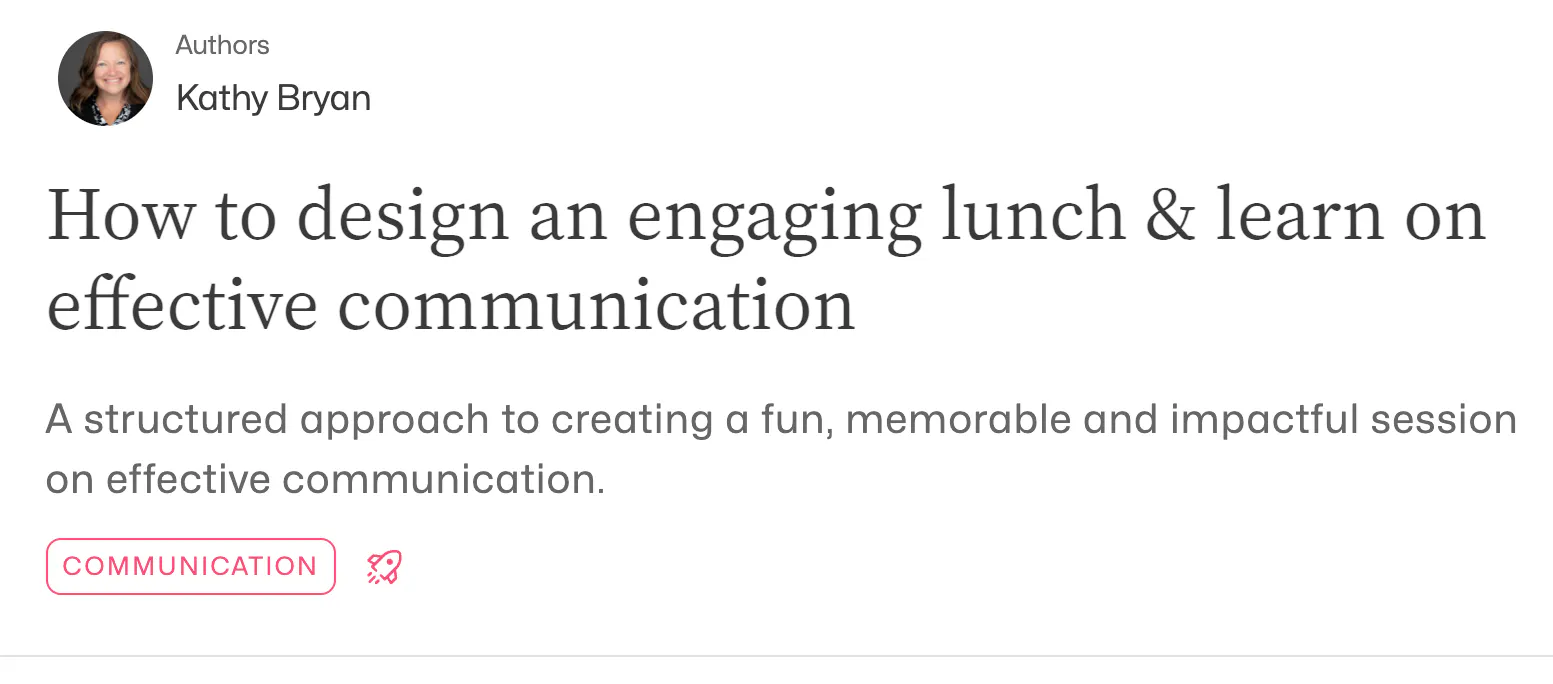
This week’s resource is for anyone looking for a fun way to give your team a refresher on how to communicate more effectively. Check out Kathy Bryan’s tips for designing an engaging lunch & learn on communication HERE ⬇️
FRIDAY FUN
👀 OH MYCopy anchor linkCopied
.png)
NOT
IN
THE
WORK
SLACK
PLEASE!!!!!!!!!!!!!!!!!!!!
That's all for this week! I hope you enjoyed! If you have any thoughts, please let me know. I'm allll ears.
Reminder: Today is FRIDAY. 🙏