essential ≠ untouchable
Hi ya!
TGIF amiright?
Well I'm here to deliver some hot questions and even hotter answers.
This week’s delightful dilemmas feature the Untouchable Employee™. You know, the one who’s “essential” but allergic to accountability and only listens to the VP) Don't worry, here’s a way to fix this without blowing up ops.
And then, what do you do when the LEADERSHIP is the toxic culture? Because nothing says “fun challenge” like trying to improve culture while the C-suite actively resists change. Yes, there’s hope. No, it’s not easy.
Let’s turn these hot messes into success stories! Or at least…less flammable ones.😅
Also... last call for NYC People Leaders working on AI strategy in your orgs! I might have some spots open up for this in-person event next week. Request a spot and we'll see what I can make happen.
ASK AWAY
✨ culture correctionCopy anchor linkCopied
✍🏾 How do you hold an employee accountable who has an excuse for everything, doesn't take feedback from anyone other than the VP, and is essential to keeping operations moving?
Context: Company size 50-99. Industry: Consulting.
📣 George Boone, Director, Organizational Effectiveness and Talent Management @ Mitratech:
Use the SBI model to frame the feedback. You can google "SBI Model" to find a lot of helpful graphics, but here is how I typically frame it to our leaders:
Situation - Describe the situation, "remember that presentation last week?"
Behaviors - Talk about the behaviors that were observed, "You came across as unprepared – you didn't have materials printed out beforehand, you were unable to answer questions when asked because you didn't factor in Q&A time, etc."
Impacts - What is/are the impact/s of the behaviors if they continue? "We will have to spend more time preparing in the future, we won't be able to send you on site with customers." Whatever they may be, it may not always be the extreme of, "you could lose your job," but if that is the case, talk about it with them.
Remember to talk about the positive and negative impacts – feedback should always be 100% accurate. Don't fluff up the feedback to maintain a positive ratio in the moment.
After framing it using SBI – give them time to tell their story. And then ask, "Are these perceptions you want to have? What actions could you take to turn these impacts into positive ones in the future?"
📣 Kaylee Tanner, Director of Human Resources @ Trace Genomics:
This is tough, as people don't change unless they want to... and if there are excuses for everything, that's a great indication that they do not want to change. First of all, keep giving the feedback and doing your part to hold them accountable. If there is a VP who is willing to provide the feedback and try to help navigate this, use them as an ally.
Also, I would spend some significant time and energy ensuring there is cross-training or other efforts to ensure you don't have a single point of failure for your operations. This lessens some of the strain on this situation, and is also important for any organization. I know it's hard when the company is small, but one person's role should not cripple the work. I've used the reasoning of "you need to be able to take vacation / if you get sick, we need to be able to operate without you" to make this a priority. Best of luck!
📣 Chadwick Savage, EVP, People @ Ally Pediatric Therapy:
I don't personally believe you can hold people accountable, you can hold boundaries and issue consequences. You can make someone capable of being accountable.
Either way, excuses are a squirrel – they're just something to chase so you don't have to talk about the actual issue which is the lack of results or behavior you're expecting. I'd get very clear on expectations and be prepared to examine your own culpability. Sometimes you're just setting expectations too high or not managing directly enough. I typically use the REI repair model when there's a break in relationship like this.
Regret - "I'm sorry I wasn't clear enough when we first discussed these expectations and may not have given adequate answers to the questions you had."
Empathy - "If I'm you, I would probably feel anxious not knowing if I was hitting targets or performing in the expected manner. I might feel annoyed or frustrated that my questions weren't answered or my supervisor was unclear."
Intent to Change - "From now on, I'll provide the expectations in writing and we'll set follow-up meetings once a week to go over any outstanding questions and provide more timely feedback on your performance so we don't get so off track."
I'd also ask if you could borrow some rapport from the VP and name drop them in any of this. "I'll be updating so-and-so on our progress together."
Safe Space members can join this discussion here. Not a member yet? Apply to join here.

✍🏾 What if your culture issues come from the top down but your job is to improve culture with leadership not looking to change? Any hope?
Context: Small (20EE) company with the chaos of one that's over 100!
📣 Emily Hanson, Director of HR @ Lovegreen Industrial Services:
In my experience, approaching this from a data perspective really helps. I started with a perception/satisfaction survey and looked at exit interview trends. Took that to the leadership team, and emphasized how a positive culture can impact turnover, productivity and increase engagement.
Show your leadership how your bottom line is being impacted and how improving culture can help!
📣 Chrissy Haux, Manager @ PineCone Vision Center:
Culture isn’t just something that flows from the top down. It’s created and reinforced at every level of an organization. It’s built in how we show up for each other, how we communicate in the day-to-day, how we respond to conflict, and how we choose to move forward even when things are hard.
Even if leadership isn’t actively driving change, there’s still hope. When individuals or teams commit to showing up with respect, accountability, and consistency, that can spark shifts in how others operate too. Culture can be contagious and your efforts matter.
Start small. Build trust. Model the values you want to see. Over time, those efforts can influence even the most resistant environments. It may take longer, and it may be frustrating, but there is always hope when people care enough to show up... for one another and for the culture they want to build.
📣 Stephanie Lemek, Founder & CEO @ The Wounded Workforce :
I'm a firm believer in culture being defined by the worst behavior an organization tolerates vs. the best things that tend to get shown off on the company website.
This situation is also amplified because in a small org, it's very likely everyone is exposed to or aware of issues. Unfortunately, in larger organizations it's easier to quarantine this bad behavior or 'hide it' for the larger org (not that I'm in support of this).
That said, I think there are still a couple of things you could try. My first recommendation is leveraging an external coach for the leaders. Frame this as a development reward, as a status symbol – play into the ole ego if you have to and and then see if that is an option to engage in some meaningful change.
Another option (that I don't love) is to find ways to minimize the negative impact of this leader (or leaders) by creating organizational barriers at certain levels or functions. I don't love this because: #1 - someone (likely HR, let's be real) is still dealing with toxic behavior, and #2 - it’s inefficient, especially in a small org.
Safe Space members can join this discussion here. Not a member yet? Apply to join here.
🚨 ON YOUR RADAR
🎧 Accessibility isn’t just ramps and PDFs, it’s actual access that keeps employees empowered. Lia Seth schools us on why most companies fail at both. Check it out on Spotify or Apple Podcasts!
🫠 Change management giving you anxiety? On June 25th I'm teaming up with Workvivo for a masterclass on how to navigate change in your organization. With things at work changing more rapidly than ever before, this is your chance to learn how to plan for that and walk away with a ton of resources! Scoop your spot and let's build your change strategy together.
🫶 If you need a reminder about why your work matters, Sergio Peña recently shared a piece on The Unseen Impact of HR: Holding the Emotional Infrastructure of Workplaces. Read it here.
📝 RESOURCE OF THE WEEK
Each week I feature a resource I love from the Safe Space library that I believe would be relatable to this week's newsletter topic.
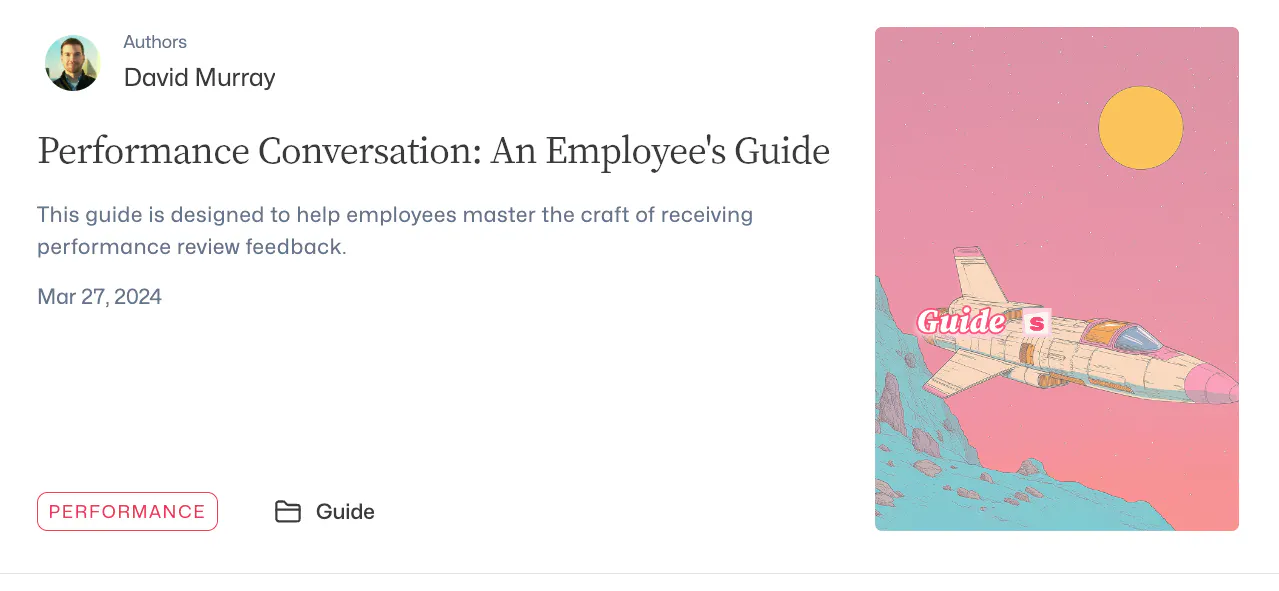
This week’s resource is David Murray’s guide to help managers effectively articulate feedback and expectations during a performance review. Check it out HERE ⬇️
FRIDAY FUN
😂 I'm tapped outCopy anchor linkCopied
.png)
This & blasting music.
That's all for this week! I hope you enjoyed! If you have any thoughts, please let me know. I'm allll ears.
Reminder: Today is FRIDAY. 🙏