let's explore
Hiiiii,
This Monday started in the BEST way possible.
My bestie has been traveling for a few months and I FINALLY got to see her in person this AM for a coffee date. I missed her terribly, so I'll be riding that high the rest of the day!!!
Another thing that has kept me buzzing this AM:
🎧 S9 of the pod is back!!!!! Can’t believe I’ve been yapping for so many seasons and y’all aren’t sick of me yet!!!! Blessed. The first two episodes are out and are vulnerable AF, as I discussed burnout and career paths feeling like they're going nowhere. Shoutout to my incredible guests Eva Bak and Ash Hynie. More fun hard truths coming this szn.
Now, onto today, thinking about your AI strategy and not if your culture is actually ready to embrace something new?
Well today’s edition is for you…
CULTURE
Fostering a culture of exploration:Copy anchor linkCopied

Is it just me or is everyone obsessed with AI strategy right now?? I mean I am the gal who is writing a few newsletters about it so I’m really not one to talk…
But amidst all the strategy, use case, Linkedin thought leadership and demos there’s something we’re not talking enough about…
👉 How to actually build a culture and environment where curiosity thrives.
Because AI adoption isn’t just about rolling out new tech, it's actually more of a mindset shift.
We’ve seen big mindshifts at work before like when email replaced paper, when the cloud made IT decentralized, or when remote work rewired how we get work done.
Each time, the tools changed how we work, but the real shift was in how people felt about using them.
But if we’re going to fully adopt and incorporate AI into work, we have to also consider the pace, the pressure, and the psychological safety (or lack of it) employees are working under.
You cannot expect innovation in a culture that rewards speed over learning or punishes failure. A culture of exploration doesn’t just magically happen, it has to be designed with intention!
And that means creating the time, trust, and space for people to experiment without fear.
The bottom line: To truly unlock AI’s potential in our orgs, we need to make space for experimentation and that starts with culture, not a strategy doc.
So let’s look why exploration and experimentation are key and how HR can help foster that culture.
Why exploration?Copy anchor linkCopied

“To boldly go where no one has gone before” isn’t just a quote from Star Trek, it’s the vibe exploration demands!!
We have to be bold and ready to charge into the uncharted waters!!
But it’s kinda hard to explore uncharted areas (or tech) when your calendar doesn’t even give you time to think (or breath)…
Exploration sounds great in theory, but in practice? Ehhhhh we have some very real roadblocks.
TBH: most teams are moving at a rapid speed, juggling shifting priorities, overloaded calendars, and under constant pressure to deliver. In that kind of environment, curiosity ends up becoming a luxury and something employees might indulge in once the deadlines are met (spoiler: they never are).
Worse, many workplaces still silently reward perfection over progress. UGHHHH.
Just some examples to explain what I mean:
❌ A marketer juggling six campaigns doesn’t have time to test a new AI tool unless someone explicitly tells them it’s okay to slow down and experiment.
❌ A manager under pressure to hit quarterly goals isn’t going to encourage the team to try something new if there’s a chance it might cause delays in timelines and goal achievement.
❌ And a junior employee who’s only ever been praised for being “buttoned up” isn’t likely to raise their hand with a wild, half-baked idea.
Could you see any of those happening in your org? I sure can…
My point is if exploration feels risky, it won’t happen.
And without exploration, innovation stalls before it ever begins and you may never fully see your employees embrace new tech or even new styles of working.
So what can you do about it? The good news is a few things!
Building it: Copy anchor linkCopied

HR can’t just build and support an AI strategy, it needs to shape the environment for the strategy to be successful.
Building a culture of exploration means creating space where employees are empowered to:
- Ask
- Test
- Tinker
- Learn
Okay but how do you actually do that??
I’ll do ya one better, I’ll tell you what we did when it came to our AI strategy, fostering the vibe of experimentation, and what we learned.
A CASE STUDY...
The backstory: My CEO came to me and said he read through a few different AI manifestos written by other CEOs, and he didn’t really like that approach. He promised to never write one (thank God), but he wanted my help in making sure we built an environment where employees leveraged tools in their work not because they were forced but because they wanted to. He asked that HR lead our internal AI strategy with partnership from others across the org.
Where we started: My CEO had been highlighting AI use cases and news in his weekly Sunday newsletter that he writes to employees for weeks but we wanted to take it one step further. We added 3 questions to our pulse surveys to help gauge where our employees currently stood. They were:
- In the last month, how often have AI tools (like ChatGPT, GitHub Copilot, Read.ai, or similar) meaningfully helped you in your work? We used a 4-pt scale where 1 was not using them yet and 4 was game changer, use them daily.
- What have been the best use cases for AI for you? If there's none, put N/A.
- What is the biggest barrier preventing you from adopting AI more widely in your work? (Select the one that applies most)
What we learned:
- Over 95% of employees used AI in the last month, and 51% stated they were using it daily.
- Use cases ranged from automating tasks, ideation, comms, to doing research and creating templates.
- One of our biggest barriers was lack of training
We had our hunch of what we were going to do prior to asking these questions but seeing the response it became clear where we wanted to start.
What happened next: We created 6-AI themed learning sessions that took place 2x a week for 3ish weeks. The goal of the sessions was to go over use cases, create a space where employees could experiment and then share and help employees get more comfortable.
In our first session we asked folks how confident they felt on their AI knowledge from 1 to 10 and by the end of the session we had employees saying they wanted to lower their number because they had more to learn. These sessions weren’t overly formal; they were open ended and discussion based.
How I would rate our success: high.
Why this worked: Look, I believe we have always fostered a curious and creative environment at our org due to the nature of our leaders and the work we do (content), so I wasn’t surprised that many employees embraced AI and new styles of working.
If you have the complete opposite at your org here’s what I would recommend:
- Start with a survey - feel free to use my questions above!
- Identify your champions and your critics. Your champions will be key to highlight and potentially lead sessions. Your critics may take longer to convince and may need a different approach than just fun learning sessions. There are the folks who will most likely want to see a policy, guardrails, and guidance outlined before going further.
- Have a policy with clear do’s and don’ts.
- Consider the learning sessions approach. Have each one focused on different use cases specific to your org and have your champions present what they’ve built and what they’ve learned.
- Don’t forget about sharing the failures. By sharing how experiments haven’t worked and what was learned you can make employees more comfortable to get started.
- Start an internal channel for folks to share ideas, wins, fails, etc
- Incorporate wins, fails, learnings in your comms to employees either via an all hands or company wide comms.
BUT DON’T FORGET: It’s not always about building programs, there’s a part of this that is deeper.
✨The exploration mindset shift. ✨
A lot of employees won’t take risks unless someone like their manager or leader signals it’s okay.
So that means getting your managers and leaders on board is critical. You want them to:
- Model curiosity
- Normalize saying “I don’t know”
- Praise when folks are doing innovative work
- Highlight failures and learnings
Pro-tip: ask yourself do my leaders model curiosity? If not, potentially pivot your energy to getting that layer aligned first before going org wide.
If this all feels daunting and you don’t know where to start I just want to say, you’re not alone!
Change is happening at an incredibly accelerated pace lately and it can be a lot to keep up with. AI is ever changing and every day we learn more and more. It’s why I've devoted a few newsletters to it this quarter to break it down even further in hopes of demystifying it for more folks.
I’ve also been creating resources for my community Safe Space to navigate these times. I mean who doesn’t love a good template or guide? Our library is popping!
✍🏼Full disclosure: You must be a member to read it but you can apply here and scoop this AI Enablement template directly from the library. It features a checklist of things to consider, 3 sample strategies to test and what else to consider. The best part? It’s a living breathing doc that you can even contribute to!
Skills, skills, skills Copy anchor linkCopied
(Headline set to the tune of Bills, Bills, Bills)
👑 We’re not just in the era of AI, we’re in the era of reskilling! 👑
Quote me on that.
Jobs aren’t disappearing overnight, but they are changing fast. And AI will augment most jobs and impact every industry out there.
That means the shelf life of a skill is becoming shorter than ever. Eeeek.
A big challenge for HR in the coming years will be understanding our talent, the gaps and where to go next.
Up next week I’m digging into how to think about reskilling, learning, and what “career growth” really means now.
(HUMAN) RESOURCES
- Recruiting woes: I teamed up with Gem in my latest article to unpack why recruiting feels so hard right now and what the future could look like once we stop frankensteining tools together and start leveraging AI more effectively.
- What fashion & beauty employees want from employers - I got interviewed, and you know I hate to share thoughts!!
- Job confidence at a low, and what you need to know.
- Taking your Teams calls from your car? Mercedes seems to think so
- Are women using AI less than men in the workplace?
- Turnover in healthcare due to workplace aggression?
WORK-LIFE BALANCE
- 📚 What I’m reading: Sounds Like Love by Ashley Poston. I’ve been obsessed with this author since I read the Seven Year Slip and A Novel Love Story. I love her style of writing and she writes some killer male leads. Just sayin’
- 📺 What I’m watching: Murderbot on AppleTV. I had this show recommended to me and I dove in this weekend. It’s funny, relatable and involves space. So naturally, i’m in!!!
- 🍰 What I’m obsessing over: pistachio no bake cheesecake. I’m on a baking kick right now so I’ve been exploring fun recipes like this one! I’ll let you know how it goes, I'm testing different crust situations.
SONG OF THE WEEK
🎧 ENOUGH. by SNACKTIMECopy anchor linkCopied
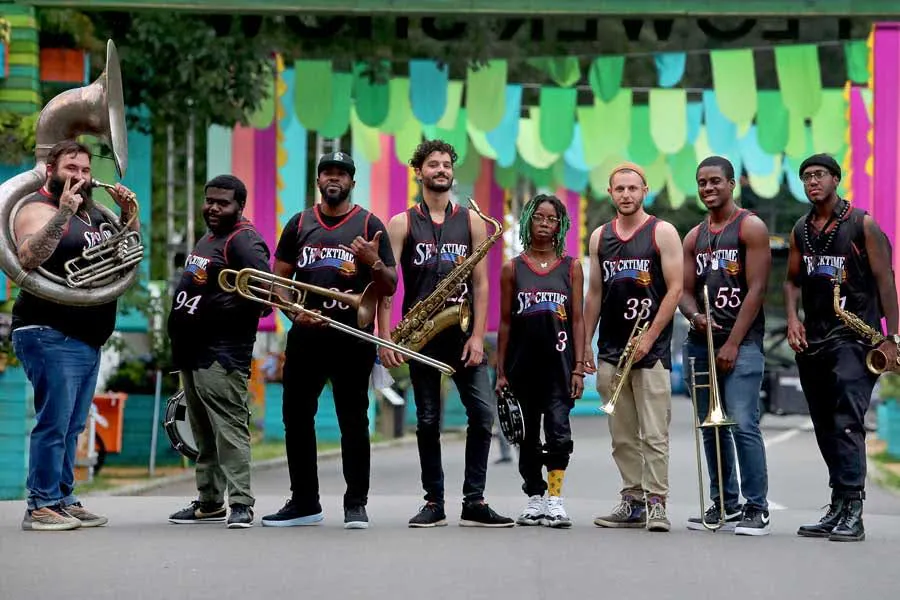
You know my long lasting love for R&B and soul music so when this band popped on my Tiktok, I realized the algo also knew about my love.
Regardless, I’ve had this song on repeat since then!!! ENJOYYY.
That's all for this week! I hope you enjoyed this, please let me know what you think and what other topics you'd love for me to cover. I'm allll ears.
Reminder: Take care of yourself and know that I support you.