navigating tough situations
Hi ya party people,
Happy Friday! Or as I’m calling it this week, the day we all collectively exhale. 😮💨
It’s also Valentine’s Day, so happy made up holiday to celebrate LOVE. ❤️
FUN FACT: I was supposed to be born on Valentine's Day but was 5 glorious days late. Setting the stage for my lifelong battle with being on time. Also, I would not like sharing my birthday with another "holiday." I am THE HOLIDAY.
Okay too much, I'll calm down.
I'll move on to today's edition and spare you from hearing more about my birthday.
First up: We’ll be talking about a boss who’s so obsessed with their external hire, it’s giving Golden Child vibes.
Then, we’re diving into how to handle grief at work when your leadership is as helpful as a screen door on a submarine.
So grab your morning coffee and Valentine’s Day candy, and let’s discuss!
And as always, if you have any burning questions of your own, you can submit them here for a chance to be featured!
ASK AWAY
💔 grief & favoritism Copy anchor linkCopied

✍🏾 What do you do with a boss who plays favorites?
Context: A new dept. was stood up and led by a manager who has been at the company for 10+ years. They hired up a team of 5; all internal except 1. The manager's attention is fully on the external. At first, this was understood. However, now, after almost 2 years, this external hire still cannot function autonomously or at the level the rest of us are. BTW ~ the external new hire has also been on maternity leave twice during this time. Resentment grows daily when this new hire is given opportunities the rest have not. I've tried to explain this off to myself as the difference between equality and equity, but that reasoning has become less and less palatable. I don't hate the player, I hate the game. What do I/we do?
📣 Alan Krauss, People Operations Manager @ Nightingale Company:
Opinion Piece – I have so many questions but generally I would say you have either a people or a process problem. I do not know what the onboarding should look like for this job, but if they are unable to meet things they were clearly trained on and you have an outline for, they need to be documented for improvements. They may not be aware of the struggles they have in performance, oftentimes managers think they are being nice/ fair managers by not addressing those things. In reality they just make it harder to draw clear expectations later.
The other detail is the process part – this being a new person may be time to evaluate and update the training process. The new people may have adapted as changes came so a new person struggling could be a sign of outdated information in your onboarding process.
📣 Jill Felska, Founder @ WantToWorkThere.com:
This is definitely a tricky one to answer without first asking a handful of important follow-up questions. Going on what we do know, I'd offer the following:
Coaching the Individual(s):
It sounds like this is coming from some unhappy team members. From an individual support perspective, I would recommend asking coaching questions to help shift the conversation from frustration towards actionable steps, while still acknowledging how tough the situation is currently. Here are a couple to consider:
- What specifically makes you feel like your manager is playing favorites?
- How does this situation impact your work, motivation, or ability to contribute effectively?
- Are there specific moments where you felt overlooked or undervalued? What happened?
- What support, recognition, or opportunities do you feel you need but aren’t receiving?
- Have you communicated these needs directly to your manager? If not, what’s holding you back?
- If your manager offered you more support, what would that look like in practice?
The goal is for them to begin identifying what is within their control versus what isn't within the situation and identify some actionable next steps that they are empowered to take themselves. This should help address the individual's unmet needs in the short-term while you focus on the larger organizational change aspect.
Managerial Expectations:
From a higher-level approach, it sounds like there may be an opportunity to define what great management looks like at your organization. While it sounds like such a simple thing, it's often overlooked and can be incredibly impactful!
In my last head of people role, I would often struggle to parse through feedback regarding manager performance, because we honestly hadn't set any clear expectations around what success in the role truly looked like. Having clarity on this piece makes it SO MUCH EASIER to objectively reflect on situations like this one and then point to specific behaviors that are either (a) missing from the managers interactions or (b) are contradictory to what's already been established.
I went through an immense amount of research on exactly what makes someone a great manager when building my Training for the Modern Manager* curriculum and I kept coming back to Google's Project Oxygen and the ten core competencies* they uncovered. Whether you adopt them completely or use them as a starting point, I highly recommend giving them a glance!
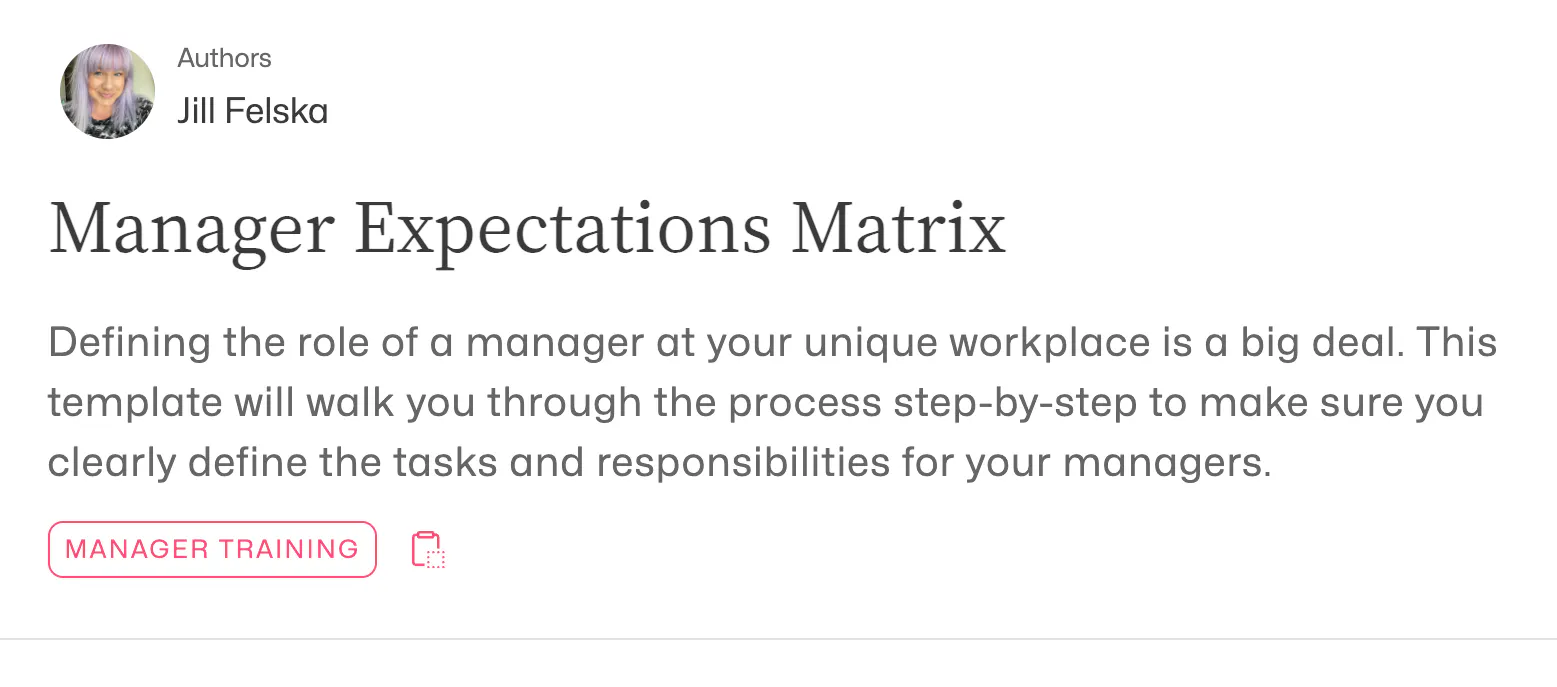
The other aspect I recommend looking at is the actual core responsibilities of managers within your organization. What tasks are they held accountable to in that role? I built a free Manager Expectations Matrix* that outlines the process for defining this in your organization, which can be a helpful place to start.
While these types of solutions aren't a quick fix, I know first hand the impact they can have in the long term. (*see the On Your Radar section for links to these resources!)
Safe Space members can join this discussion here. Not a member yet? Apply to join here.

✍🏾 How do you handle grief in the workplace when someone unexpectedly passes?
Context: 120 employees, small business, private sector gov. A very younger coworker of our unexpectedly passed away and this has never happened in the history of the company. Leadership has not exactly... led us through this so it's falling on smaller groups of us to navigate.
📣 Shelby Subsick, People Operations Manager @ Mainstay:
Sincerest condolences for the team's loss! The approach I would take would be to share the news first with the immediate team then to the greater team ensuring privacy and respect for the family is maintained as far as shared details.
Allowing space and grace for the team to process the impact and hold space for empathetic conversation if needed is important. As an org, depending on the circumstances, we've donated to a charity of relevance in the employee or the families' name. We've also allowed immediate managers/teams to organize a condolence gift to the family if they choose.
📣 Julie Cameron, Director of HR @ Sage Ventures:
This happened at my last company. The employee was 21 and died at work. He had either a pulmonary embolism or ruptured aorta – very sudden. It was pretty traumatic for them to watch him getting CPR, etc.
We had a counselor available for anyone who wanted to talk to someone. We connected people to the EAP. We also let people take some time off, if they needed it. We also did a company-wide CPR training about a month later via Red Cross. The employees felt like if they'd known CPR maybe they could've saved him. (I don't think it would've mattered, in this case, but it made them all feel better and more prepared).
At my company now, we haven't had a death of a coworker, but when someone passes away in the employee's family, I send an email to the employee expressing condolences, sharing our bereavement policy and additional time off policy, asking if they want flowers or a donation in their family member's name and sharing some grief resources from our EAP as well as the contact info for the EAP.
I also send an email to the employee's supervisor with some "how to help your coworkers through grief" resources and remind them of the bereavement policy, as well.
📣 Emily Hawthorne, Director of Talent @ TN SCOR:
I'm so sorry you all are experiencing this loss. We actually just went through this with our team (though it was more of an expected situation as the team member had been battling cancer for a long time) and a few things we did: reached out to our PEO and had grief counselors on site for two days; held a team meeting where folks were able to process and share memories; are holding a blood drive in his honor with some partner orgs he worked with; created an online board (I think it was a kudos board type thing) where people in his network could leave condolences; our CEO shared an online memoriam; and we talk about him often – i.e. we have a "question of the week" board in the office and more than one has been related to him/honoring him (i.e. one was something along the lines of "In honor of ___'s curiosity, what new thing are you hoping to learn about this year?")
Last thing I would add is that leadership made sure to message that it is okay to not be okay and to take it easy in the weeks right after… and encouraged people not to jump back into things 100% if that didn't feel right to them.
Safe Space members can join this discussion here. Not a member yet? Apply to join here.
🚨 ON YOUR RADAR
🎧 I Hate It Here Podcast: I'm always dropping new episodes with your favorite People Ops leaders! Check it out on Spotify or Apple Podcasts!
🤖 Reducing Bias in HR with AI: My brilliant friend Torin Ellis worked on this incredible resource. I learned so much from reading this report and highly recommend you download too!
📺 Trailblazing Footprints: Writing Black History Today: Another incredible friend Keirsten Greggs interviewed Billy Allen who appeared on this season of Queer Eye.
🧰 Jill Felska’s Training for the Modern Manager Program for modern startups and scaleups.
❤️ From ‘I Hate it Here’ to ‘I Love it Here’: Your Culture Transformation Roadmap. HR can influence culture change in any organization, and this course teaches you how. Join the Safe Space community to access it!
📝 RESOURCE OF THE WEEK
Each week I feature a resource I love from the Safe Space library that I believe would be relatable to this week's newsletter topic.
This week’s resource is for anyone looking to empower great managers at your org by setting clear expectations. Check out Jill Felska’s Manager Expectations Matrix template HERE ⬇️
FRIDAY FUN
😂 Live footage of my face in convos Copy anchor linkCopied
.png)
INTERNAL DIALOGUE:
Mildly agitated, clearly hasn't slept enough but is overcaffeinated voice.
Where are they going with this? Why did they say that? OOF I would have said differently. Oh GOD WHERE IS THAT SENTENCE HEADED?
Ohhhhhhh!!
They pulled it back together, those are my talking points, okay, we're fine. It's fine. We're good.
CRISIS AVERTED.
<end scene>
That's all for this week! I hope you enjoyed! If you have any thoughts, please let me know. I'm allll ears.
Reminder: Today is FRIDAY. 🙏