started from the bottom, now we here
SUPPORTING PEOPLE WITH

Hellooo lovely people!
We started from the bottom (Monday) and now we're here (Friday)! 🎉
You know what that means... The Dear Hebba & Friends newsletter shares advice from the brilliant People Leaders in my Safe Space community. 😍
Today's newsletter is about starting from the beginning: How do you build an HR department from the ground up? How do you deal with difficult CEOs?
And who coined the term "fun police"?? Seriously who started that! I'd like to have a word with them. 🚨
If you have an HR question or concern of your own, you can submit it here and watch for its appearance in a future edition! 👀
ALSO... My 1-day virtual workshop is on October 26th from 1-4 PM ET. It'll be a day chocked full of company culture and how to make yours better!
Reserve your spot while there's still space 🕺🏽
Now, let's jump into it 👇🏽
SPONSORED BY BAMBOOHR
The time between offer accepted <> new hire starting can be hectic.
Why?
Well, the task list can feel endless and then there’s the pressure to deliver a superb experience.
How can you ensure everything important gets done?
From sending all the documents required for the new hire to all the tasks for the manager, HR and IT. Not to mention, scheduling meetings and introductions to coworkers, it can be a lot!
And you absolutely don’t want to drop the ball because we all know that employees will make up their mind whether to stay or go during the first 90 days.
To make those first 90 days super impactful you need the New Hire Checklist from BambooHR.
It outlines 20+ essential tasks including an onboarding buddy checklist, list of new hire docs, orientation tasks, and more!
You’ll never have to worry about forgetting something again. Sigh of relief
ASK AWAY
🔨 building from the ground upCopy anchor linkCopied

✍🏽 How do you build an HR foundation for a company that has never had an HR department or personnel?
Context: I recently landed a job with the hopes to help a company of 20 employees begin creating HR structure. I have a degree in Organizational Management, with a minor in HR Admin, but no work experience. All my studies dealt with existing HR functions, but never about implementing one. Where would I start in creating this space for my organization?
📣 Patrick Young, People and Culture Director at Issue One:
I was the first HR person at a nonprofit that had been established nearly 30 years before finally investing in HR.
One of the first things I did was set regular meetings with the leaders of the organization. What are their current pain points? These conversations were casual, but they helped educate me on the current landscape and their practices. Now these conversations were not always pleasant--sometimes I had to coach and correct and begin dismantling problematic processes, but they allowed me to see firsthand what was going on while developing a rapport.
I also began surveying staff on a host of things (engagement, DEI, morale, benefits). While I knew the results would be concerning, it allowed me to see what needed to take priority. Be sure to communicate openly and frequently. Let people know what you're working on so you don't seem like a mystery.
Finally, put yourself out there. It's ingrained in so many minds that HR is scary or only here to make things harder. Make sure you're sitting down with colleagues, having casual conversations, and making a connection. It may seem small, but it's the best thing you can do to create a positive and sustainable HR presence.
📣 Sarah Ghessie, Senior Director of HR at Fundrise:
I agree with Patrick on starting to have regular meetings with leaders to learn about their teams, how they operate, how they think about growth and development, etc.
I've come in as "the first HR person" at a few different orgs, and one thing I try to do in addition is meet 1-1 with everyone in the org (can be a little tricky when it's a larger org, but hopefully with 20 employees it should be slightly more manageable) as part of your listening tour.
Starting to establish rapport and giving employees a place to share their feedback can help you understand where are some of the areas that you should target for initial, smaller wins as well as help you build out your short, medium, and longer term roadmap.
📣 Jessie Fields, Director of Talent Development & DEI at C2FO:
Join Safe Space for support at your fingertips every step of the way 😉
📣 Cerys Cook, Chief People Officer at Swift Medical:
Agree with both Patrick and Sarah - it really begins with developing relationships and eventually trust. I find doing several listening tours a few months apart to be a really good use of time even though time consuming.
A team that hasn’t had HR in the past will be wary and it is critical to establish that you aren’t the police or the principal’s office which will take time. In your first listening tour you will get the surface level stuff - make sure you action some of the smaller things you hear quickly so they know you listen - as a result you will likely find on your second tour that you will start to get to some of the juicier core challenges that will likely take longer to fix.
Keep in mind too, you will hear a lot of noise - try to understand the root cause of the noise rather than the noise itself. Fix the root, the noise will start to go away.
_4.gif)
✍🏽 How should employees handle a CEO who is now acting HR?
Context: The CEO chose to minimize the HR contractor's interaction to only be for payroll and has told all employees to go to them (CEO) for all things HR related. It is a small company with less than 50 employees. The CEO creates toxic work culture and uses personal information/life events against an employee.
📣 Ashley Hofkens, People Operations Manager at Leapfin:
Is there is someone who can give him or feels comfortable giving him feedback? I’ve worked closely with an employment lawyer who has shared with me that in terms of risk, the CEO should be disconnected to some extent from HR related items.
For example, if employees have general complaints or concerns, these should filter through HR. Of course you can’t keep the CEO completely oblivious, but I was told that anything that they “know” makes them also personally liable.
They could be individually at risk, not just the company. I’m not a lawyer, so can’t speak to the exact details, but something to think about.
Many more People Leaders had thoughts and advice on these questions...
Find out what they had to say in the private Safe Space forum.
🚨 ON YOUR RADAR
🖥️ October 25th: I'm hosting HR Therapy with HiBob's very own Sarah Reynolds and my good friend Jessica Winder. Together we're rethinking pay transparency. Join us!
🍕 October 26th: I built an abridged version of the NYC Culture Can't Wait summit, so you can fix your company culture from the comfort of your own couch!
🔗 Hirefor Partnership: HireFor makes your life easier when it comes to recruiting (and Safe Space members get a HUGE discount).
💰 Pay Transparency matters (but it's also difficult). That's why I created this course to help you stay ahead of the curve.
FRIDAY FUN
🚨 Fun Police Copy anchor linkCopied
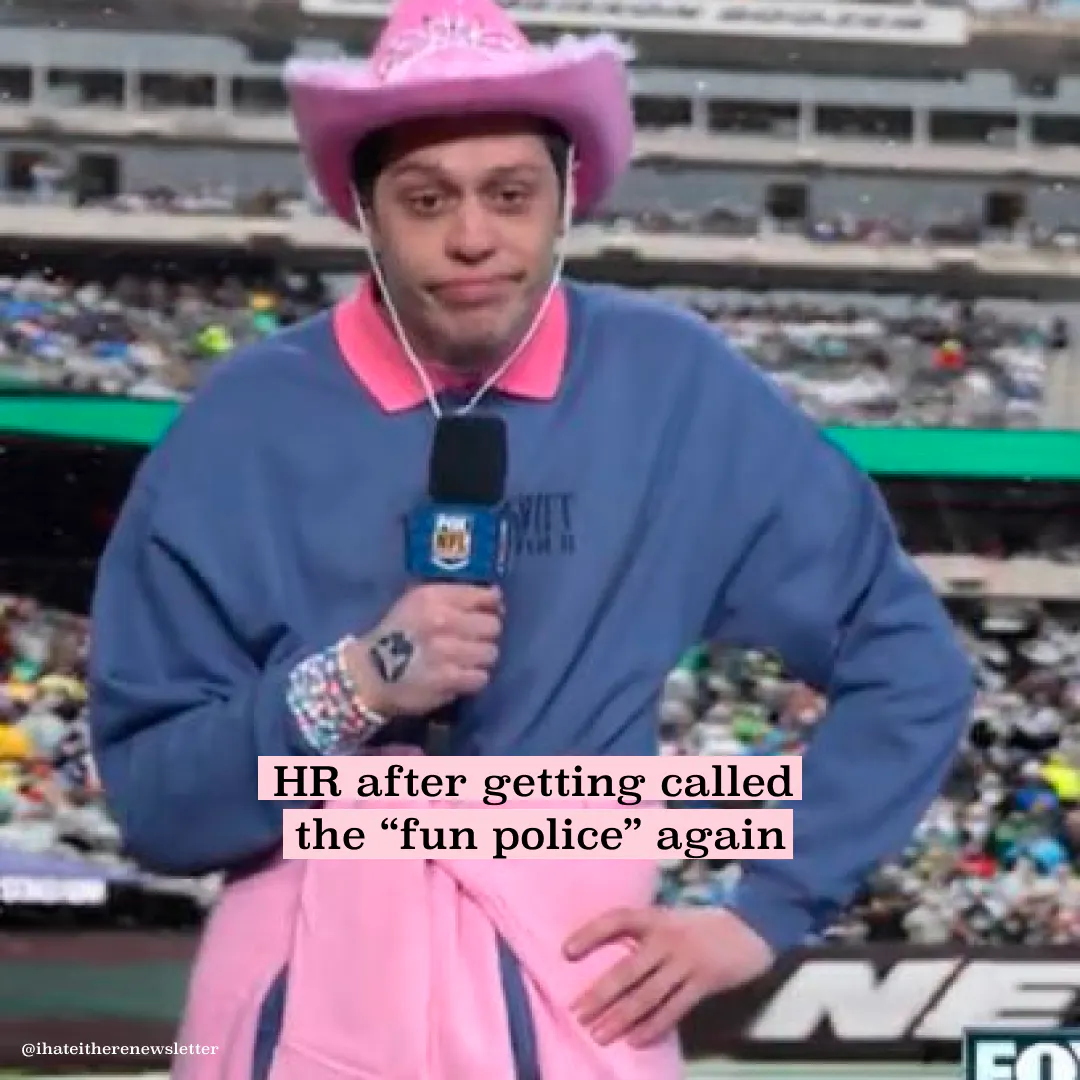
MaYbE KeViN if you didn't break SO many company policies, I wouldn't HAVE to be the fun police! Never thought about that one, huh? 🤨
What's the craziest thing you've ever been called as HR? Why? Let me know 😵💫
That's all for this week! I hope you enjoyed! If you have any thoughts, please let me know. I'm allll ears.
Reminder: Today is FRIDAY. 🙏