toxic boss survival guide
SUPPORTING PEOPLE WITH

Hi ya,
Happy August 1st and happy almost-weekend! 🥳
It’s been a solid week TBH, but I’m ready to slow-roll into the weekend with a book, as FAR AWAY from the heat as possible.
Fun fact: my mother used to tell people that I would rather have a book than food. Like, I would sacrifice eating so that I could read a book.
I’m just a girl standing in front of her bookshelf trying to decide what world I want to dive into!
✨ Anyway, just one question this week! ✨
We’re talking about toxic bosses and breaking down what to document, how to safely escalate, and what HR needs to do when the call is coming from inside the house.
Got your own spicy question? Send it in here and you might be featured next Friday! 👀
SPONSORED BY theEMPLOYEEapp
Your frontline team deserves better than a poster in the breakroom and a pizza party once a quarter! 😩
theEMPLOYEEapp’s free whitepaper breaks down how brands like Hilton, DHL, and PepsiCo are successfully engaging their frontline workers with mobile-first comms, real-time recognition, and onboarding that doesn’t make people quit on day three.
If 80% of your workforce is on the frontline, but 71% of them are disengaged...guess what?!
That’s not just an HR problem, it’s a risk to your entire org.
This guide gives you the data, the strategy, and the receipts to start fixing it today.
Grab the whitepaper and get some actionable help for the people doing the hardest work!
ASK AWAY
😭 horrible bossesCopy anchor linkCopied

✍🏽 How do you prove to HR that your direct supervisor is toxic and demonstrates poor leadership skills?
Context: I work for a government entity, the office has 48 employees. There is a mix of professional and clerical staff.
📣 Mikki Forbes, COO @ Forbes Consulting, LLC:
This is a tough but important question, and unfortunately, a common one.
To “prove” toxicity or poor leadership to HR, you need more than feelings or assumptions. HR needs documentation that shows a pattern of behavior that is specific, factual, and tied to workplace impact. Here’s how to approach it:
1. Document Everything (Objectively): Keep a running log of interactions that demonstrate the toxic behavior or poor leadership. Include:
- Dates and times
- What was said or done, with exact quotes if possible
- Who witnessed it
- How it affected your work, morale, or team dynamics
Stick to facts, not interpretations. For example: “On July 12 at 3:45 PM, supervisor yelled in front of staff, ‘You clearly don’t know what you’re doing,’ after I asked for clarification on a policy update.”
That carries weight. “My boss is always mean” does not.
2. Identify Patterns and Impact: HR takes action based on repeated patterns, not isolated moments. Try to connect the behavior to:
- Turnover on your team
- Poor morale or disengagement
- Compliance or policy concerns
- Risk to public service or organizational goals
The more you can show that the behavior is not just unpleasant but damaging to the mission, the more credible the concern becomes.
3. Use the Right Channels: If your agency has a grievance procedure, complaint form, or ombudsman, use it. Otherwise, request a confidential meeting with HR. Frame your concern around workplace standards and the impact on operations, not personal dislike.
Say: “I’m concerned about leadership behaviors that I believe are affecting our team’s ability to function effectively. I’ve documented several examples and would like guidance on how to proceed.”
4. Protect Yourself: If retaliation is a concern, make that clear upfront. In many government agencies, retaliation against a good-faith complaint is a separate policy violation. Ask HR to note your report and your concerns about retaliation in writing.
📣 Stacey Blum, Sr. Corporate HR Administrator @ KRM
I would go directly to HR - tell them the issues that you are experiencing & in your opinion a list of problems. Ask them directly what they need from you to do something about it. I am interested to see what others have to say.
📣 Jordan Giddens, Head of People in Operations @ Rice & Kendig:
What is it exactly that you feel is toxic or a demonstration of poor leadership? Do you have anything in writing, such as Slack messages or emails, that you could use as an example of this behavior?
In the past, when I have encountered this issue, I have started communicating with said "toxic" person via email as much as possible so I have their communication and my response in writing in case there is any doubt as to what has been said.
📣 Sondra Norris, OD/OE Consulting:
I don't doubt that you're having difficulty. Here are some thoughts:
1. Clarify your desired outcome. Your situation is unique: government office (known for putting up with a lot in exchange for job security), 48 people (not very many – easy to become targeted, lots have already rationalized why they put up with this behavior, you may not have allies who are willing to change their own minds). You're not likely to get a person dismissed. And reporting it can make a hard situation much worse for you.
2. Be careful using labels and terms like "toxic." Now you've decided that the problem is this person – and you're consciously or unconsciously keeping score, possibly mis-attributing behaviors to a character trait. Instead, act as an objective observer, comparing OBSERVABLE behaviors to what an effective manager would do (SETS CLEAR GOALS – what and why; PROVIDES PERFORMANCE EXPECTATIONS – how the job is to be done, which competencies are most important, which relationships are important, which technical knowledge should be leveraged; KEEPS TEAM INFORMED – about the bigger picture, progress towards goals, priorities, how they want the team to perform & behave, the team culture they are committed to creating, reinforcing, and protecting; etc.).
3. Sit and pretend you are this person. From all that you know (do you know enough?), what is their reality? What are their priorities? What challenges are they facing to be successful in their own job?
4. Regulate your emotions and challenge your own beliefs, assumptions, and conclusions. What is getting activated inside you working with this person? Do they remind you of someone with whom you had a bad experience? Are they expecting too much while not providing enough – what does that mean to you? Have you said anything about this? What are you contributing to the situation – in your silence, in your allegiance to what's been tolerated and the conversations about this person, in your own need for development – technical or otherwise?
5. Make a list of what you'd like to see from them – in OBSERVABLE BEHAVIORS and why they're important to anyone (not just you) being able to perform at their best. Identify the ones you believe they're TRYING to do.
6. Talk with them first, from an objective POV. Ask questions about their reality. Management is lonely – we have a ton of expectations about how managers SHOULD conduct themselves, and because of the power dynamic, we're often reluctant to voice our needs. Managers deserve a chance to improve or fix a situation (we all do) instead of getting reported for something we may not be aware is impacting people the way it is.
Safe Space members can join this discussion here. Not a member yet? Apply to join here.
🚨 ON YOUR RADAR
🎧 I Hate It Here Podcast: I'm always dropping new episodes with your favorite People Ops leaders! Check it out on Spotify or Apple Podcasts!
👋 We said bye to likes inside Safe Space because honestly? They aren’t important! What matters is real connection, real support, and reacting like a human, not a brand. The new feed is LIVEEEE and it’s always improving to reflect what we value around here!
❣️ Romance at Work: Balancing Policy, Risk, and Reality: Sergio Peña recently published a piece on romantic relationships at work in the Safe Space library.
😲 Half your team’s skills will be outdated by 2027...now what? Hone’s upcoming virtual event, Forward, is here to help HR and L&D leaders stop panic-Googling and start planning. You’ll get hands-on frameworks, real-life strategies, and an unfiltered look at how companies are using AI to upskill teams and drive performance. It’s free, it’s actionable, and honestly? You can’t afford to miss it!
📝 RESOURCE OF THE WEEK
Each week I feature a resource I love from the Safe Space library that I believe would be relatable to this week's newsletter topic.
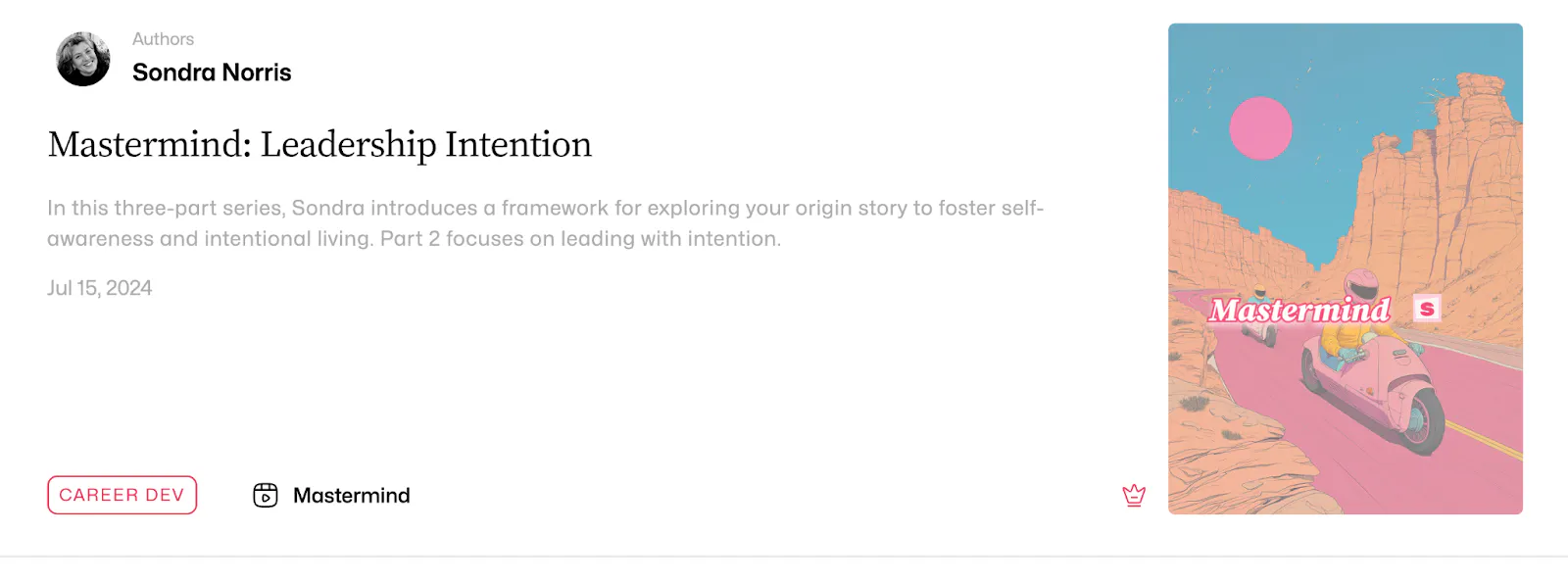
This week’s resource is a replay of Sondra Norris’ Mastermind on Leadership Intention. This session focused on the challenges and responsibilities of leaders, emphasizing the importance of genuine interaction and the impact of leadership on a team's dynamics. Check it out HERE ⬇️
FRIDAY FUN
😭 feedback woesCopy anchor linkCopied
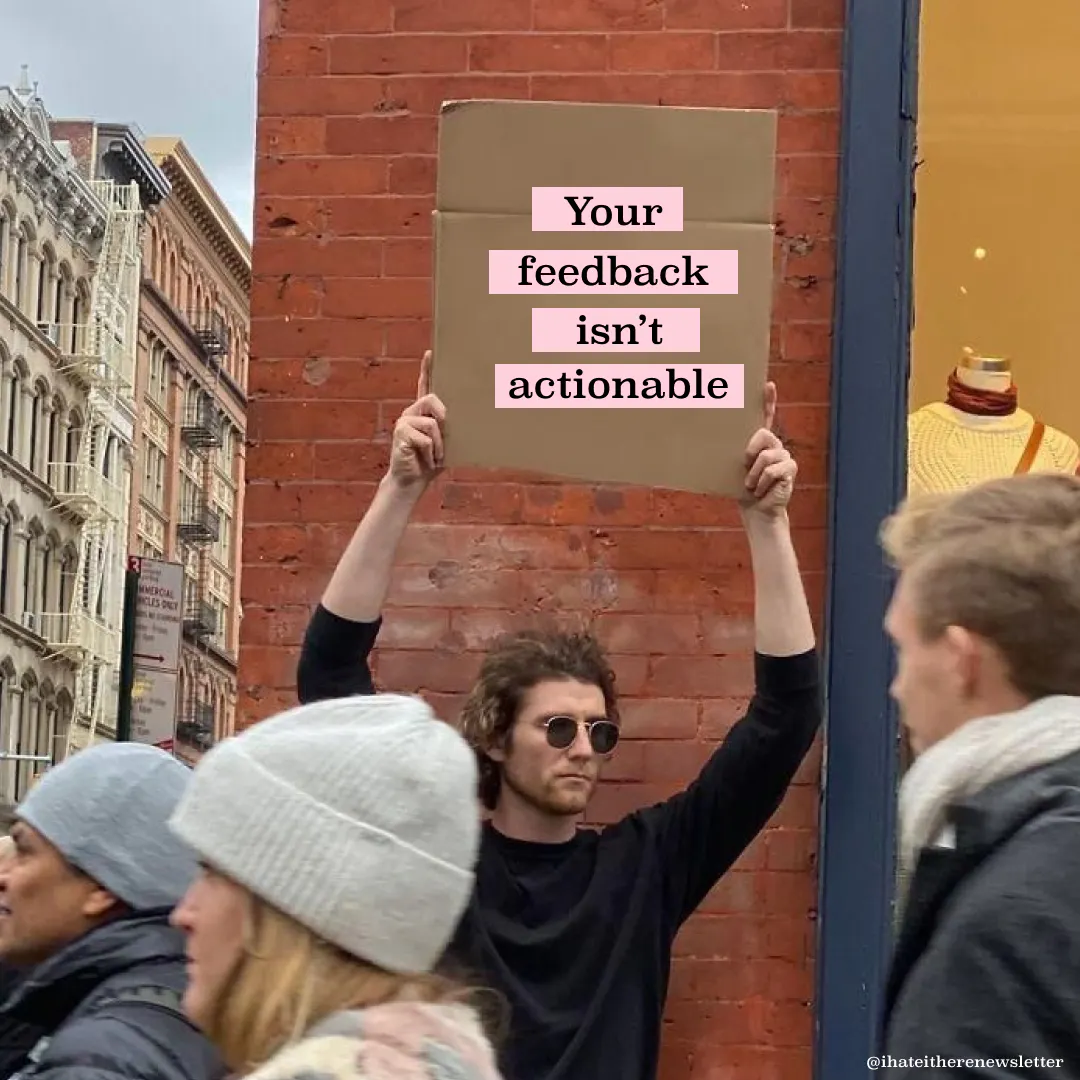
I’M IN THE HEIGHT OF PERFORMANCE REVIEW SZN AND I WANT TO SCREAM THIS FROM THE MOUNTAINS!!!
Feedback should be actionable not just about preferences.
That's all for this week! I hope you enjoyed! If you have any thoughts, please let me know. I'm allll ears.
Reminder: Today is FRIDAY.