does the top get a pass?
When employees miss, its a PIP. When an exec misses, it feels different... true or false?
HIII,
There’s some crispness in the air and I’m ready to fullllly lean into my cozy fall vibes.
✨THIS IS THE SZN I COME ALIVE. ✨
It’s also the quarter I contemplate every choice I’ve made during the year!!
I’m trying to stay anchored in the really cool stuff I’ve been working on, like:
📺 Where does ALL our time go in HR? I’m exploring all that and more on HR Therapy! RSVP and be prepared to find out more and even get some tips on how to manage all the things on your plate.
🎧 The pod gets spooky this week. I read some HR Horror Stories and genuinely contemplate WHY we do this job. Just a casual existential crisis on the pod. You defff wanna listen and some stories may be NSFW.
📣 Are org charts dead? Kayshia Kruger dropped that line at Safe Space Summit then proceeded to talk about work charts and the future of how we organize work between humans and AI. She was kind enough to demo what she had built for me, to which I instantly said, we have to build this live. Soooo, Claude baddies assemble! We’re taking our tasks and turning them into work charts and showing you how to do it as well.
🖥️ Safe Space Summit VIRTUAL is coming in March of 2027. RSVP so you can get all the deets on speakers, topics and more! Interested in being a speaker??? Drop a note here and I’ll be in touch. I’m pumped to get new and fresh voices on every stage.
Nowww onto today, back to our regularly scheduled programming where I talk about accountability!
ACCOUNTABILITY
Accountability starts at the top:Copy anchor linkCopied

Here’s how accountability works at most companies: it flows down.
🎥 Let me set the scene: Execs set the goals, the managers cascade them to their teams, then employees get measured against those goals.
Now, if you miss your number, project, or task then potentially there’s a conversation, a doc, maybe even a PIP depending on previous performance convos.
Now, let’s take a pause and think about the last time a senior leader made a call that didn’t work.
Hmm… what example could I use here!
Let’s see, maybe it was the reorg that got reorged six months later, the process or tool rollout nobody used that disruption everything and made nothing better, or the goal that ended up being not relevant to anything in the business.
What happened to that senior leader?
TBH, usually nothing.
And even when something DOES happen, it’s dressed up to look like nothing. Oh, they’ve “transitioned into an advisory role” or they’re “excited for a new opportunity,” and we alllll pretend we don’t know exactly what’s going on.
But employees are seeing this for exactly what it is.
🚨Korn Ferry found that among non-executive employees globally, trust and confidence in senior leadership dropped from 68% in 2024 to 65% in 2025, then fell again and harder to 53% in 2026. Fifteen points in two years. OOF.
ANDDDDDDD
📣 Average senior leadership ratings in reviews on Glassdoor dropped below 3.5 in April 2026, the worst month since 2017. Yikes.
So, why does the top get a pass?
Before anyone calls me out, this is not a “execs are villains” edition. Although I COULD write that edition, most leaders I’ve worked with WANT to be accountable.
But sometimes the system just isn’t built for it!!!
Hear me out, three reasons this happens:
1. It’s nobody’s job. The CEO is managing the other execs, the board, current and future investors, and probably about six fires. The board sees quarterly numbers, not whether a senior leader made their team miserable. Accountability at the top is everyone’s job in theory and nobody’s in practice.
2. Information gets softened on the way up. The higher you go up an org chart, the more curated everything gets. Bad news gets softened at every layer, it’s called the MUM effect. By the time it hits the exec team, “everyone is disengaged” has become “some moral concerns.” It’s hard to own a problem when you don’t have the FULL picture or even realize its a problem.
3. Consequences are private. When an employee misses, it gets documented. When an exec misses, it gets handled, quietly, over dinner, with a nice package and a LinkedIn post about new chapters.
So is the fix more process for execs? NO. We don’t need one more process!!
To fix the accountability problem at the top, you need visibility. Let me explain!
What accountability actually looks like at the top:Copy anchor linkCopied
If the problem is that consequences at the top happen in private, the fix is pretty obvious: do it in public.
Visibility then becomes accountability.
Here’s what that looks like:
👀 1. Say the miss out loud. This doesn’t feel like a revolutionary thing to share but it's something teams often miss doing this!
Here’s an example: your org does a big reorg. Everyone is still confused about who owns what, two people have quit and the whispers have started to become more common. At the all hands the CEO says, “We’re excited about how much alignment and productivity we have seen with this new structure.”
Uhhh what????
Now picture an alternate reality. Same all-hands, but the CEO says, “I pushed this reorg. It didn’t work. Here’s what I got wrong, and here’s what we’re changing.”
Owning a miss costs almost nothing, and it usually buys more trust.
💯 2. Create the same scorecard. Think about your last performance cycle. Your goals were written down, checked in on, and rated!! HOW FUN. If you missed them, there was ABSOLUTELY a convo about it. (Not fun).
Now think about the exec team’s goals... Do you even know what they are??? Where do those go? Are they ever discussed publicly?
If employee goals get reviewed regularly then shouldn’t exec commitments too?? Yesssss!!! If your all-hands only ever shows the wins, that’s not real accountability...
How we currently do this: we cover our goals every all hands and have the exec responsible for it report how things are going. That regular reporting also ensures that even when we fall behind on something we’re discussing it!
📣 3. Build a channel that doesn’t route through the person. Here’s a scene every HR person knows: someone needs to give feedback about a senior leader... and the only place to send it is that leader, or someone who reports to them. So they don’t. Or they do, carefully, and it gets completely softened into “no big deal” on the way up. See: MUM effect.
You can add skip-levels, upward feedback, or even a pulse survey to capture feedback that goes to someone other than the person being rated all fix this.
Don’t forget to complete the motion: if feedback is given about something specific that should be changed, have the person receiving the feedback SHOW what actually changed. Feedback that disappears into a void teaches people one thing, which is to stop giving it. I consistently reference feedback my direct report has given me to show her what I’m doing to address it. I probably take it too far but I think it’s built so much trust that she knows I will internalize the feedback and action where I can.
This includes us, yes us!!!!Copy anchor linkCopied

Mirror mirror on the wall, who is the finest one of them all holding everyone accountable?
HR???!
✅ We play a big part in goal setting. We run the review process. We work on and approve the PIPs. We sit in the room when someone gets let go.
We're the accountability infrastructure.
Here’s the thing about HR work that I think a lottttt of us know: so much of it is hard to measure.
You roll out a new career framework and it takes nine months to find out if anyone actually developed or gets promoted because of it. You coach a manager through a rough situation and the “win” is… a conversation that didn’t blow up. Prevention doesn’t show up neatly on a dashboard with numbers in green or red.
Some days our work feels utterly intangible.
And TBH that makes holding ourselves accountable even harder. When the wins are slower and fuzzy, it’s really easy to let the misses get soft too. Not to mention, sometimes we get blamed for outcomes we only partly control, and get credit for almost nothing we actually built.
✨ So who holds HR accountable?✨
For some of us, it’s nobody. Not in any real or meaningful way. I said what I said!!
Real talk: if we don’t define what accountability looks like for our own work, someone else will. And it’ll look a lot like “someone quit, so HR failed.” WHICH ISN’T FAIR!!!
If you sit at the top of the org, your credibility to hold the exec team to a standard comes from visibly holding yourself to it first. You can’t ask your CEO to own a bad call at all-hands if you’ve never owned one of yours.
✍🏽Homework: Let’s try something maybe uncomfy this week! Pick one HR initiative from this year that didn’t land. Write down what you expected, what actually happened, and what you’d do differently.
The accountability receipt?Copy anchor linkCopied
I called this the receipts quarter, so here’s the accountability receipt to keep track of:
✅ What works: Leaders who name their misses first earn trust instead of losing it. Employees are far more likely to see their organization as fair and just when they strongly agree that leaders are held accountable and admit their mistakes.
💸 What this cost: Some control over the narrative. Ego. And even the comfort of “handling it privately.”
🔄 What changed: Accountability stops being something you do to the people at your org and instead it becomes the standard for everyone.
Don't forget: saying your accountable is only half the story, YOU HAVE TO ACTUALLY DO THE WORK AND IMPROVE. That yell was more for your senior leadership, not you.
Now, next week… more than half of employers say they regret laying people off for AI.
So... who’s owning that? 👀
(HUMAN) RESOURCES
- From fanfics to best sellers
- The scary side of job hunting
- Voters biggest concerns in midterms
- Fed to hike rates again?
- Martha Stewart apologies for awful Halloween costume
WORK-LIFE BALANCE
- 📚 What I’m reading: A Court of Splintered Harmony by Sarah J Maas. I spent the first 30% of this book trying to remember what happened, then I spent the next 40% WAITING for something to happen and also annoyed at every main character and their behavior. The final 30% thinking… is this it??? Sooo yeah guess I’m ready for movement 2 because movement 1 just felt like a “previously on ACTOAR.” I said what I said!
- 📺 What I’m watching: Saturday Morning Detention. The cast of this show is from another Youtube show I used to watch. There was drama and they started their own channel and naturally I followed them. This trio: Herm, Aaron and Denny is literally magic. I’m obsessed!
- 👀 What I’m obsessing over: branding. I went down this rabbit hole of trying to figure WHY I love certain brands and what I could learn from them. Yeah, I’m a nerd. If you have a fave brand I want to know why!
SONG OF THE WEEK
🎧 Babydoll by Jamie Miller feat. Antonio CiprianoCopy anchor linkCopied
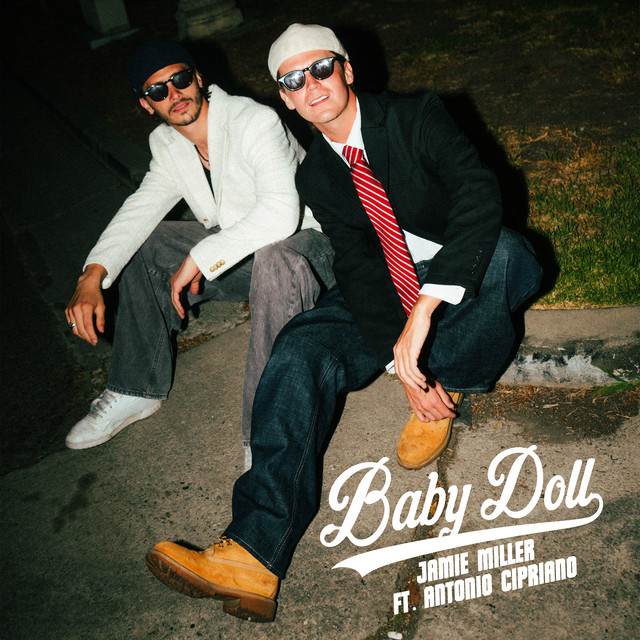
Now before you say I ALREADY SHARED this song with you this is a diff version feat the incredible Antonio Cipriano.
You may know him from Off Campus, I know him as Renee’s ex that In the Kitchen is about.
Anything else I write here would probably be inappropriate so I’ll quit while I’m ahead but JUST LISTEN OKAY??
Their voices compliment each other perfectly, LIKE BUTTER.
Anyhoo, if you need me I’m learning the babydoll dance.
I hope you enjoyed this, please let me know what you think and what other topics you'd love for me to cover. I'm allll ears.
Reminder: Take care of yourself and know that I support you.