HR Jumpscares: The Workplace Horrors That Would Terrify Freddy Krueger Himself
Sponsored by:
When everything feels connected and cursed, Aon helps leaders find the decisions that matter the most.
Uncurse your strategy
One time, I had a nightmare that an employee quit.
Then I woke up and genuinely couldn’t remember whether it had happened! 😭
That’s where my HR brain is currently living…somewhere between a normal Tuesday and a Freddy Krueger movie where the striped sweater represents an unexpected resignation, and the knives are next year’s healthcare renewal rates, or something like that.
What genuinely concerns me, though, is the kind of workplace we’re building while everybody’s stuck in survival mode.
How are we thinking about workplaces that include everybody when anything in the benefits realm gets examined with a magnifying glass?
How are we supposed to make the case for the whole picture of benefits when leadership keeps asking which individual line item can disappear without causing an immediate riot?
Oh, and retirement plans keep sliding toward the bottom of the list too. Hardship withdrawals are on the rise as employees struggle to stretch their paychecks, navigate a tough job market, and absorb a projected 9.5% rise in healthcare costs for 2027.
This is one extra messy ecosystem where health affects wealth, wealth affects mental health, and mental health follows people into work because human beings haven’t figured out how to leave their nervous systems in the parking lot.
And then we ask those same people to show up and be ready to do their best work?!
That’s super tricky!!
I’d argue that benefits have a lot to do with whether that’s possible…It’s hard to bring your A-game to a meeting when you’re also wondering how to pay for a prescription.
Somewhere in all of this though, I have one question: Is anybody thriving? 😒
Getting your CEO and CFO to see the whole picture feels like a constant uphill battle, and I think that’s because HR investments rarely provide the ✨instant ROI✨ folks have come to expect.
You can order groceries and have them dropped off at your doorstep in under an hour, and you can stream a movie in 5 seconds instead of hopping in a car and driving to Blockbuster…which I’m lowkey starting to miss!
My point is that people strategies need planning, and adapting those programs takes more time than most folks think.
Behavior change can take as much as 6 months before you have anything meaningful to show.
So, when today’s work environment already feels like the part of the horror movie where the lights go out, and everyone decides to split up, how do you even begin planning for tomorrow?
I would start by looking directly at the topics keeping HR leaders awake:
- AI changing jobs faster than anyone can agree on the skills people will need next
- Healthcare costs that seem determined to reach the moon
- A workforce whose mental health has been dragged through several consecutive seasons of plot twists
- Retirement plans getting bumped down the priority list while employees wonder if retirement is just a myth their parents made up
That’s exactly which topics we’ll be covering now, using a few spooky movies to illustrate the horror! 👹
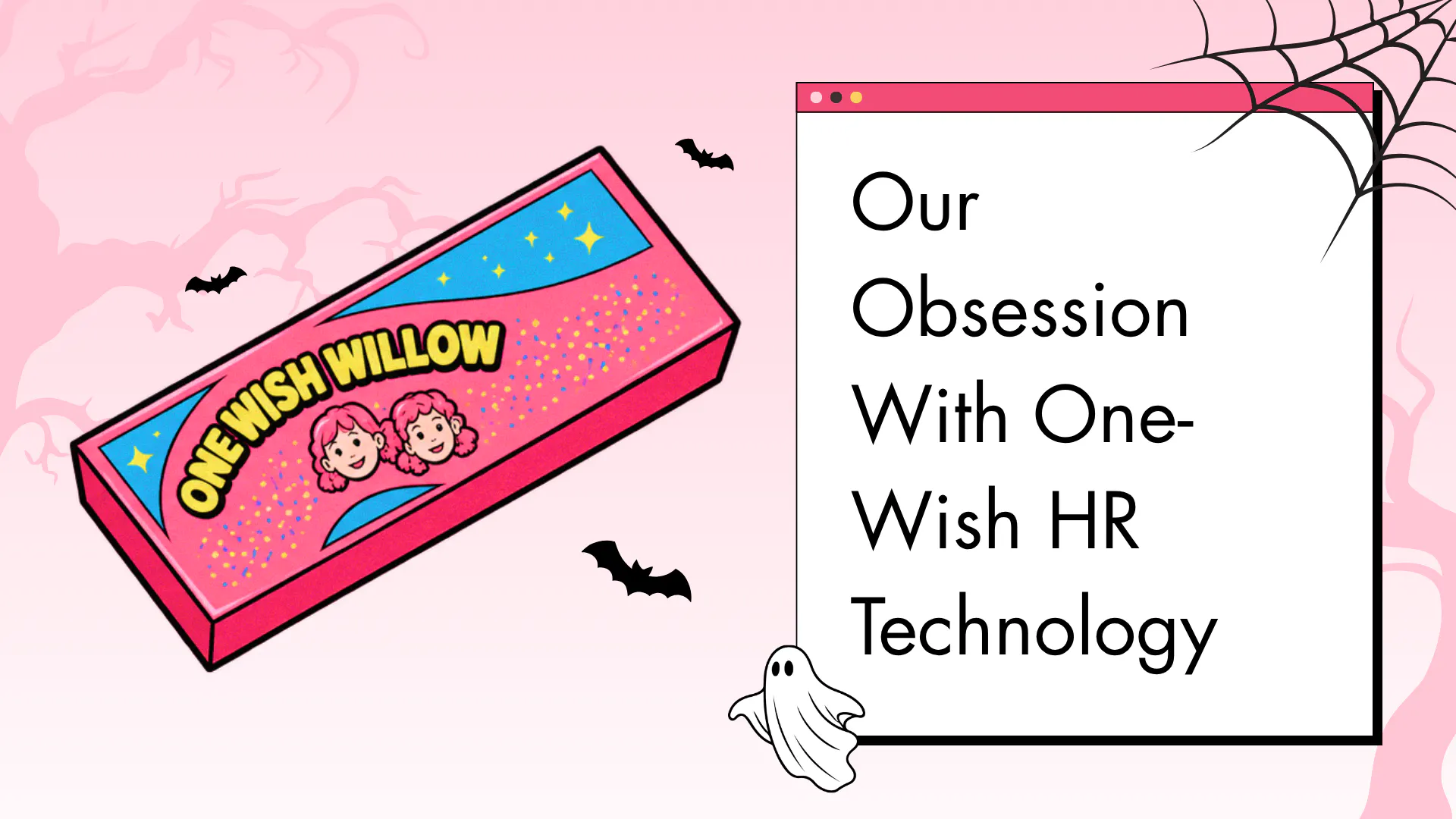
🎥 I’m starting to feel like AI has become HR’s version of Obsession.
Basically, everybody made one wish to work faster and have better tech that gets rid of the monotonous admin tasks…fair to say?
👀 But as soon as the wish was granted, everything started getting weird, and now leadership wants to know: Where on earth is the ROI??? 👀
All of a sudden, HR is in the hot seat, trying to explain what being more productive means for the people doing the work.
If a tool takes half the tasks off someone’s plate, do they get breathing room, and how does their job change??
Best believe employees are asking those questions too! If part of your role gets automated, it’s normal to be skeptical that the empty space will just get filled with twice as much work! 😬
We’ve been through plenty of workforce transformations before. For example, the internet and email both drastically changed how we work.
In fact, waaay more digital tools kept showing up, and every time, people had to learn new skills and figure out where they fit.
AI is moving the conversation along faster, but HR still has to deal with the very human questions that come with change:
Who gets trained, and is the training the same across teams or should it be customized?
What happens to the time people save? Are we using it to address burnout, or just adding more to everyone’s plate?
If a role changes significantly, do compensation and rewards change with it?
Those answers matter a lot more than a polished demo promising to give everyone their Fridays back!
Because if a new tool is hard to use or people aren’t trained properly, employees and managers will just find another way to get their work done.
Next thing you know, Susan’s spreadsheet has risen from the grave, and someone is asking HR why the shiny investment hasn’t delivered its promised gains yet.
We’re learning in real-time that orgs need a MUCH clearer view of their talent and future workforce requirements. Aon’s AI and Workforce Hub help orgs connect those decisions instead of letting each one wander into a separate cursed basement.
AI probably won’t end us, but our refusal to plan for the human part might make the rollout feel pretty apocalyptic!
I feel like every year the healthcare renewal season begins with you promising yourself that you’re gonna try to get ahead of it this time…then the numbers arrive! 🙃
Suddenly, HR is staring at another increase while leadership asks why healthcare costs so much, employees ask why their coverage costs so much, and EVERY person involved looks at us like we personally set prescription drug prices from a secret office beneath the building.
🎥 This is where healthcare starts giving me Backrooms vibes.
You keep walking through identical hallways searching for an exit, except every door opens into another convo about cost containment.
You pass the same vendors multiple times hoping their options look more appealing by the 3rd glance, and somewhere in the distance, finance is asking whether employees really use [insert benefit here].
Then you turn a corner and run into retirement! 😭
For mid-market employers with lean HR teams, keeping a plan on track means coordinating with payroll and providers while also catching small issues before they become expensive ones.
📖Aon gets into the practical decisions in its guide to retirement plan complexity if you want the full tour.
The scariest part is how many pressures are stacking on top of each other:
- The same care employees have been getting for years now costs more, and Aon’s 2027 medical trend forecast says that isn’t letting up anytime soon
- Employees are struggling to afford their share, and employers have limited room in the budget
- HR is expected to protect the quality of the benefit while finding savings that apparently nobody else in the healthcare system has discovered
- Retirement plans need ongoing attention from HR teams that already have plenty on their plates
Oh, and you’re supposed to make all of those pieces work together without frightening employees or accidentally wandering deeper into the maze. 😱
💰Aon created a Cost Containment Insights Hub that helps employers make sense of that maze through market insights and advisory built around the workforce.
Truly, I hate Freddy Krueger.
🎥 I watched A Nightmare on Elm Street when I was like five years old, which was a spectacular decision…because I had recurring nightmares about him through college!
Freddy’s whole thing was attacking people in their sleep, and current workplace stress has basically expanded the franchise.
People are feeling existential dread while they’re sleeping, but they’re also feeling it while they’re commuting to work, checking their bank balance, and sitting through meetings. 😩
Overall mental health feels not good for a lottttt of folks.
They’re dealing with financial instability, all while surviving or becoming victim to layoffs, hiring freezes, return-to-office debates, and leaders announcing transformation with the excitement of someone who won’t have to absorb the extra work.
💔 The part that gets skipped a lot is that HR is experiencing the same things too…holding everyone’s frustrations while carrying our own.
We watch employees lose trust all the time, and at this point, I would just love to be a witch and cast some spells to magically fix it all!
I’d start by putting affordable healthcare in the cauldron, mixed with financial stability and a culture that teams can be proud of.
Unfortunately, since my invitation to Hogwarts remains lost in the mail, HR has to work with available resources and C-suite buy-in.
If someone is worried about getting through the month, or whether their job will even exist next quarter, another webinar about resilience isn’t gonna make that disappear. 😑
Sure, HR can offer support, but leaders also need to take a hard look at the decisions creating the stress: overall workloads, benefit costs, how change is communicated, and whether employees have any reason to trust what they’re being told.
Retirement belongs in that convo too, since it always seems to get pushed to some future amorphous date!
It may feel distant to someone worried about rent next month, but setting it aside doesn’t make the future less expensive.
The real challenge is learning how to support employees through today’s emergencies while still helping them prepare for the life they want decades from now.
📣 Aon’s take on how pooled employer plans can improve retirement outcomes can help orgs approach long-term financial well-being with a little more clarity!
All of the issues we discussed today are connected, whether leadership budgets for them holistically or stuffs them into separate rooms. For example:
- AI changes jobs and skills
- Healthcare costs influence financial stability
- Financial pressure hurts mental health
- Mental health affects performance and retention
The monster keeps changing masks, but the ecosystem stays connected!
📣 Aon helps orgs see more of that ecosystem before the next scare lands.
Aon helps companies examine benefits, talent, workforce wellness and productivity, retirement, and risk with greater clarity.
Through its global experience across Human Capital and Risk Capital, Aon brings analytics and market perspective into the decisions leaders are already struggling to make. 🧠
That’s particularly helpful when HR needs more than a pile of alarming statistics to give everybody!
Instead, you need a credible story to give to leadership. You need to show where risks overlap, what inaction could cost, and why an investment in your people may require patience before the payoff appears.
You need someone who understands the maze and can help you choose a route your org can follow.
The future will always contain surprises. HR doesn’t need psychic powers…although I remain open to becoming a witch. 🧙♀️
What you really need is a partner that can help turn uncertainty into decisions.
Aon is in the business of helping orgs make better decisions, with the clarity and confidence to protect their people and grow their business.
It was fun while it lasted Freddy, but it’s time for you to go now! 👋