what happened last week
HELLO PARTY PEOPLE,
I'm writing this with a full-blown Summit hangover. Not the alcohol kind, but rather the emotional kind.
Last week we hosted the Safe Space Summit in Huntington Beach. There were four keynotes, breakout roundtables and more than a few tears.
Yes, I said tears!!! Since when did it get weird to cry in public? I’ll cry here, there, everywhere don’t test me.
If you were there: hi, I miss you already. ❤️ Y’all poured into me!!!
If you weren't there: this newsletter is for you.
I'm giving you the cliff notes from all four keynotes so you can steal the good stuff for your own team.
BUT THAT’S NOT ALL!!!!!!!
I was so stressy about how we had limited room at Safe Space Summit sooo I talked to the team and we decided we had to do something. THIS IS THE SECRET I’VE BEEN KEEPING!!
📣 Safe Space Summit VIRTUAL is coming to your computer screen in March 11th 2027!!!!!! Three tracks, incredible keynotes, fun, puppies (yes puppies), and even a DJ. It’s free and it’s built FOR YOU. For the challenges we’re facing so RSVP here and I better see you there!
🎧 The cult is back together on the pod. RyanMae, Josiah and I decided it wasn’t too soon for another cult meeting. What games did I make them play this time??? It’s my life mission to keep coming up with games to play with them on the pod.
🎃 HR Horror Stories (Vol. 4!!!!) is back. This is the last call for your spookiest HR stories. LET’S HEAR EM. The ones that have been submitted have my jaw on the floor!!
Okay hot off the presses, your Safe Space Summit recap.
SPECIAL EDITION
What went down at Safe Space Summit:Copy anchor linkCopied
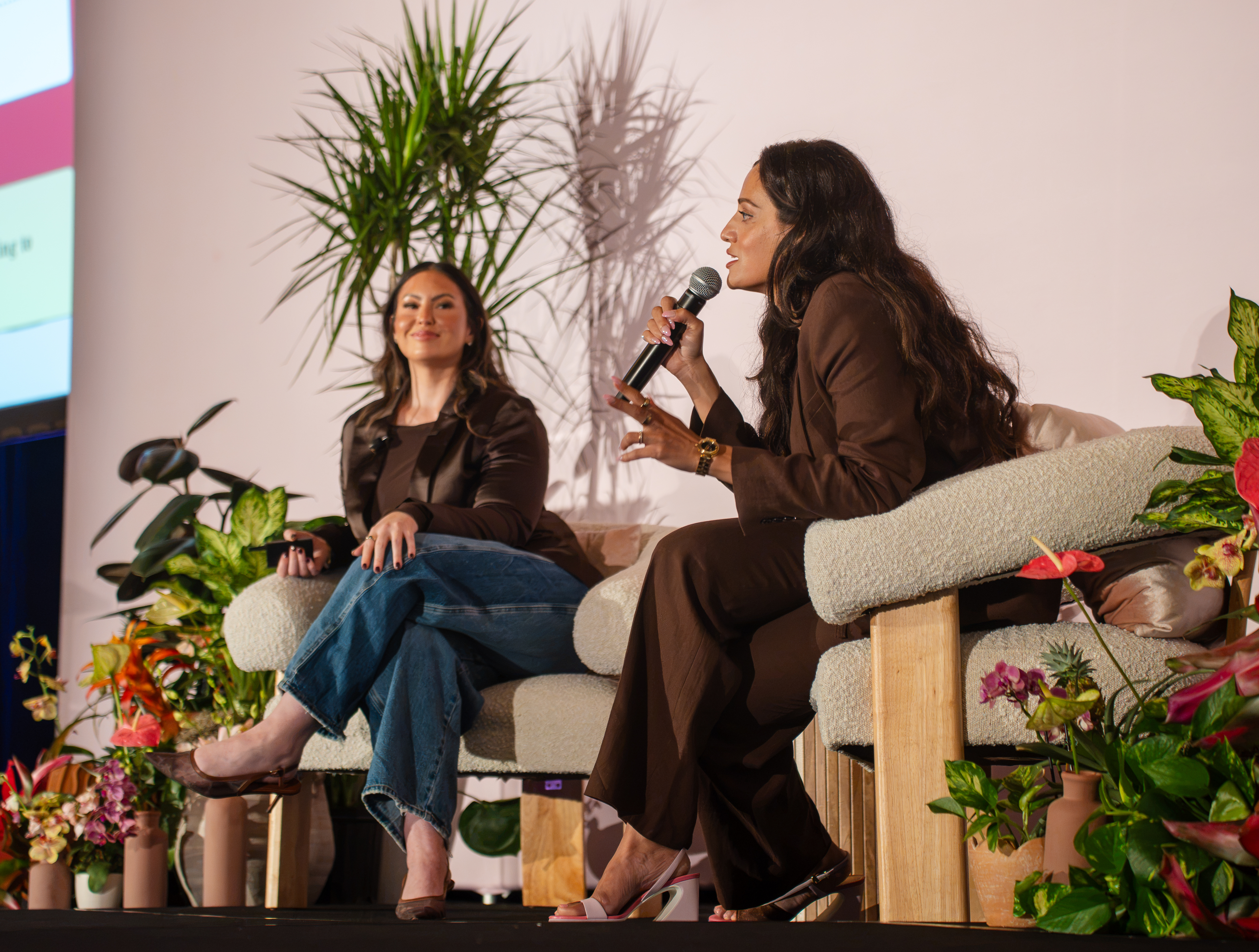
TBH: I didn’t think the world needed another HR conference.
But that’s because of how I thought of HR conferences. You know the drill. Giant expo halls. Someone scanning your badge before you've had coffee or before you’ve decided you even want to talk to them. Too many sessions on "the future of work" that all somehow say the same thing. You leave with a tote bag and zero new people you could actually call.
We wanted to build something different.
Safe Space started as a community for HR leaders who are tired of carrying the job alone. The Summit’s goal was to be the in-person version of that! Curated, intimate, and built for people facing similar challenges.
Sooo how did we do that? I can’t spill all the secrets but I’ll tell you the content can be make or break.
So below you’ll find a recap of the most important parts of the keynotes delivered and how to get in touch with the speakers!
Here's what each keynote taught us 👇
Keynote 1: AI has no finish lineCopy anchor linkCopied
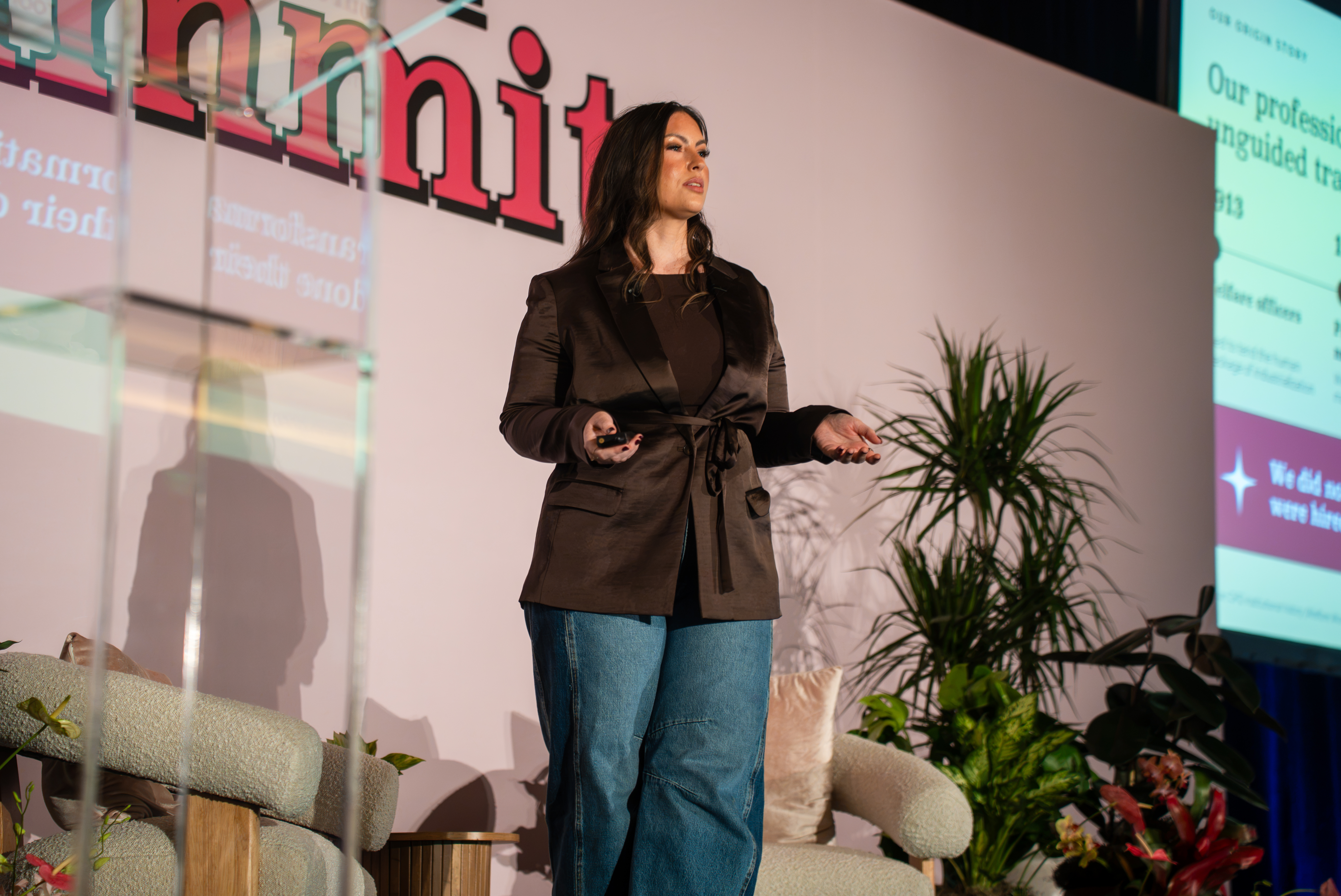
⭐ Kayshia Kruger opened the Summit with a BANGER: AI isn't a transformation. It's a permanent state of change.
She talked about how every big shift in history had friction built in. The printing press took 200+ years to change daily life because most people couldn't read. Electricity took about 40 years because factories had to be rebuilt around it. That friction gave humans time to adapt.
AI's interface is… talking. So there’s not a ton of friction there?? The only speed limit left is how fast people and organizations can absorb change, and guess which function owns that?
DUN DUN DUN.
Us!!
The three rules of change management AI just broke:
- Change has an end state. Kotter, ADKAR, Prosci, they all assume a stable "after." AI doesn't have one. If your rollout never feels like it "lands," the playbook is broken, not you.
- Leaders have the answers. 1 in 3 workers is already using AI in secret. The person furthest from your AI strategy might be your most advanced AI user.
- People resist change. They don't. They're absorbing it faster than we can give them guidance. The bottleneck is us, not them.
The part that got me was the rewrite of the stories we tell ourselves. Like "I used to be good at this."
Kayshia's reframe: the job literally changed.
The old job was walking people to a destination. The new job is building an org's capacity to metabolize change that never stops.
And for anyone worried HR is "overhead" in an AI world: 74% of HR leaders say companies cutting headcount for AI are overestimating the gains. Upgrading tools without redesigning the people system has tanked productivity since literally 1951.
Work redesign is THE SKILL, and it's ours.
Her big idea: org charts map humans, but they can't show agents working alongside people. Enter the "work chart" map tasks, not titles. What stays human, what gets automated, what goes to an agent.
Steal this:
- Make friends with your CIO. IT is absorbing the human fallout of AI and does not want to hold it. Offer to co-own the AI council in exchange for technical knowledge.
- Skeptical CEO? Don't lead with AI. Lead with what keeps them up at night, then work backward.
- Be the translation layer between engineers and employees. Engineers do not want to run training. You do.
📣 And if you’re curious about how to make a work chart, Kayshia was kind enough to agree to join me for A LIVE BUILD in Claude! Come hang out with us as we build.
Keynote 2: Storytelling is a HR superpowerCopy anchor linkCopied
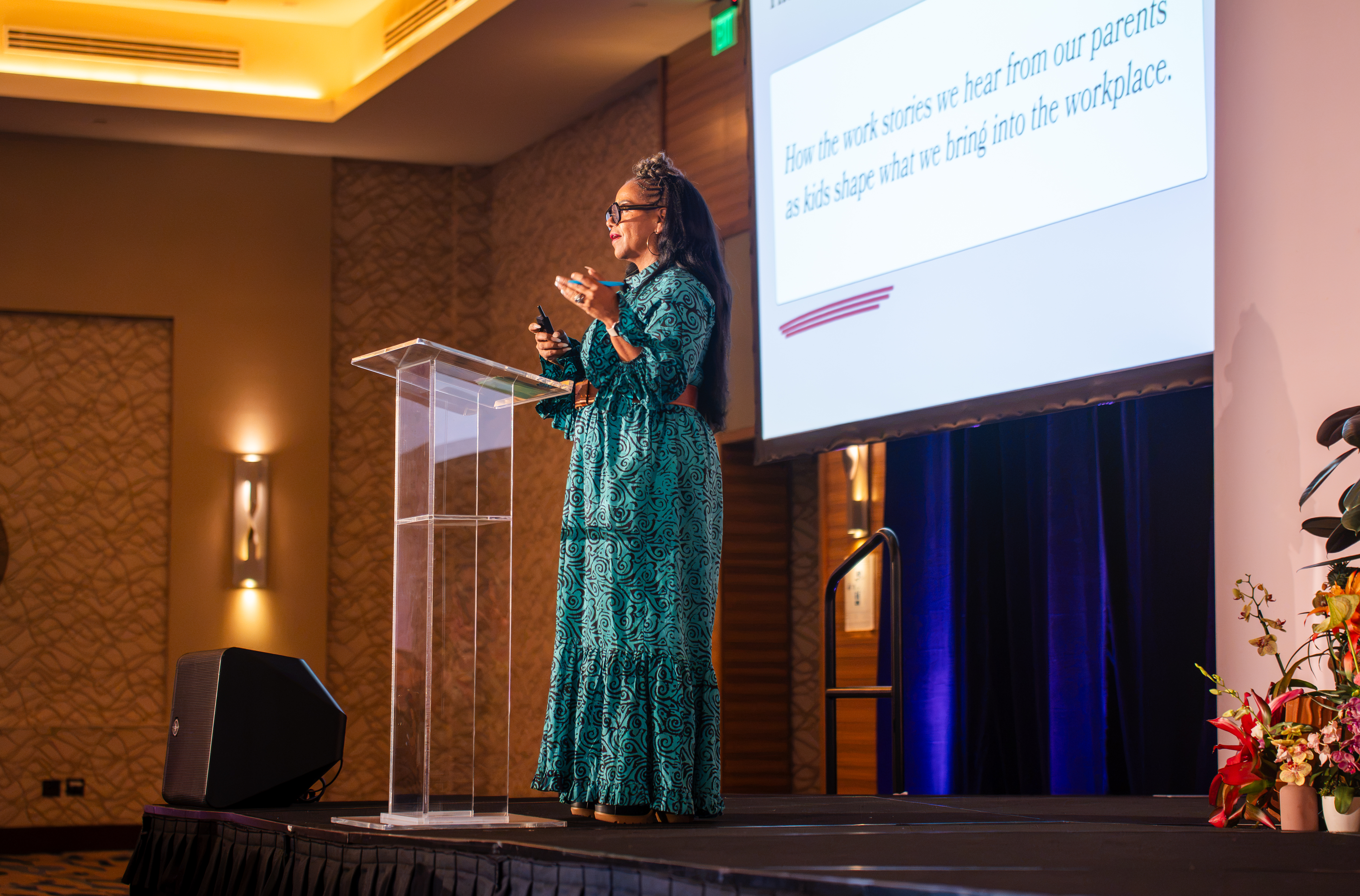
How many times have you had to make the business case for… your own existence? (Don't answer that. I already know.)
⭐ Tara Turk-Haynes took the stage and made this point: HR keeps losing the room because we bring data when the room wants a story.
So she gave us a framework, the origin arc:
- Origin: what's the prior experience or life parallel that frames the problem?
- Stakes: what happens if we don't act?
- Turn: what changes when HR is brought in as a true partner?
- Payoff: what's the outcome?
Two moves I'm stealing immediately:
- Build the story before the meeting, so the meeting becomes the decision point instead of the debate.
- Let employees tell it. Find the people who lived the success and let them be the origin.
Then she flipped the story to a very relevant example, recruiting. Most interviews sound like interrogations. Tara treats them like character development.
Her favorite question to ask:
- Tell me about an act of inclusion that worked well for you at work.
- Describe a project you cared deeply about that didn't go your way. How did you respond?
Biggest takeaway: know your own origin arc before you pitch the business one. If your "why" isn't clear, nobody else's will be either.
And if you missed it, Tara has joined me on the pod to talk allll about storytelling. She is a playwright after all!
Keynote 3: The psychology of mistakes Copy anchor linkCopied
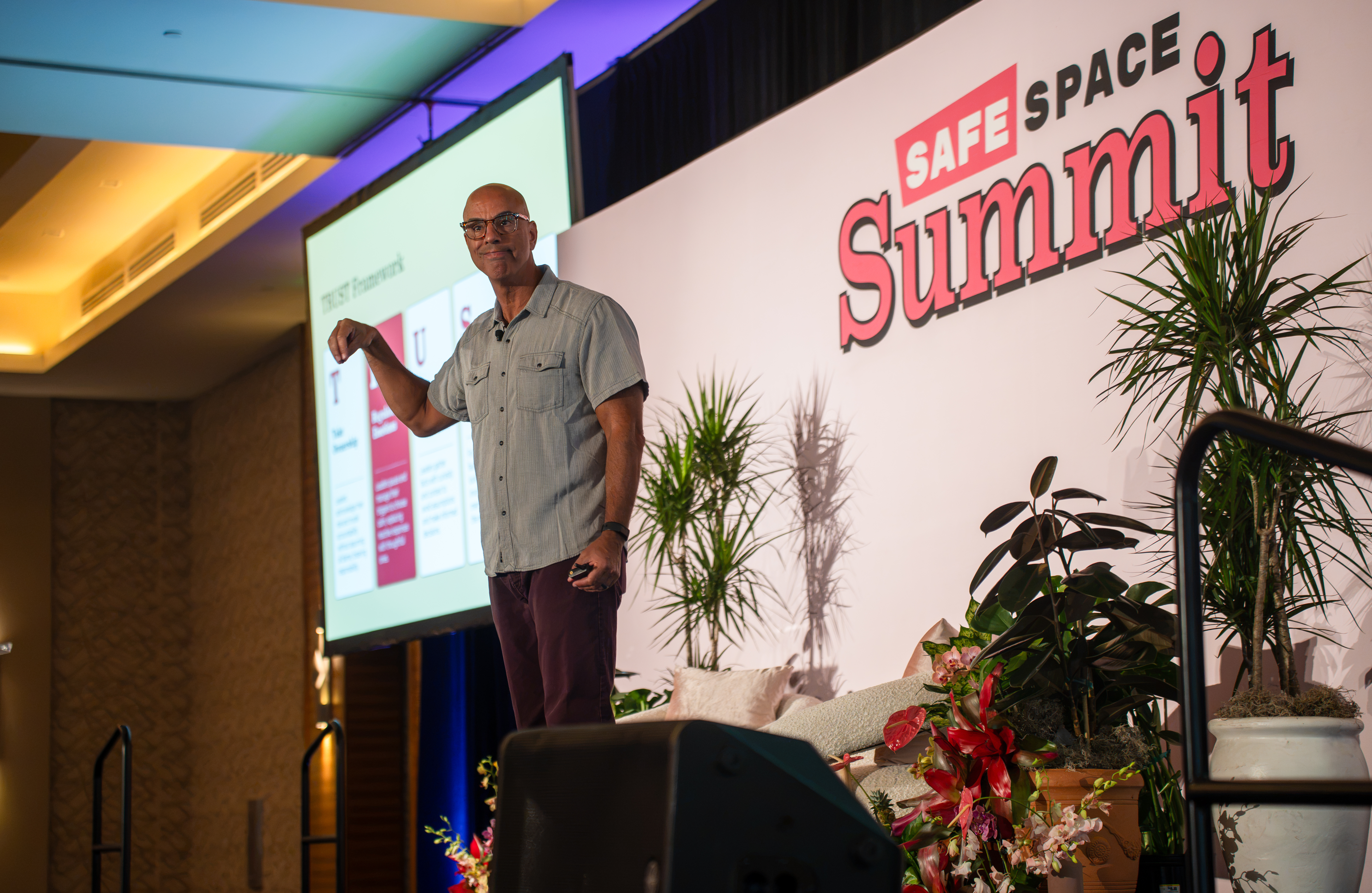
⭐ John Baldino has 35+ years in HR, so when he says conflict is a money problem, I listen:
- The average employee spends 2.8 hours a week in conflict or deep disagreement
- 85% of people deal with some kind of workplace conflict every week
- That adds up to $359 BILLION in wasted costs across the US workforce every year
I had to read that last one twice. Billion with a go to the moon B!
His core argument: mistakes are a byproduct of work, not an abnormality. When we respond to them punitively, people don't stop making mistakes. They stop telling you about them.
And the "I told you so" culture, especially from the top, kills any appetite for risk-taking.
One line I wrote down immediately: punishment is not the same as consequence.
Mic freaking drop. 🎤
You can hold people accountable without making them afraid to raise their hand.
Compliance and psychological safety are not mutually exclusive.
His framework for handling a mistake:
- Acknowledge the emotions and take a breath (sometimes more than 1)
- Listen actively (and take notes)
- Identify what each person owns
- Solve it together
- Teach for next time
Then he went somewhere I didn't expect, forgiveness at work. Not the religious kind. The functional kind. Grudges decay the person holding them, not the target. Forgiveness is just taking back someone's power over your decisions today.
And HR? We walk around with a judgment framework by default. It's really easy to slip from professional judgment into blame. (Guilty.)
My favorite moment was in the Q&A! Someone asked what to do when a senior leader won't let go of an employee's old mistake.
John's answer: ask them, "What's the parole time? Give me a real metric."
I CACKLED. Then I wrote it down. Then I cackled again.
Steal this:
- Rebuilding trust with a leader who got burned by HR? Get in a room with a whiteboard. List their grievances, then define what a win looks like. Check back in 3 months against that list.
- Becoming everyone's unofficial therapist? Empathy isn't therapy. Ask, "What would you like to see as a win by the end of this conversation?" and point venting to your EAP or additional support. .
- Measuring psychological safety? Ongoing sentiment surveys with open-ended questions beat a once-a-year engagement survey.
Keynote 4: The loneliest role in the orgCopy anchor linkCopied
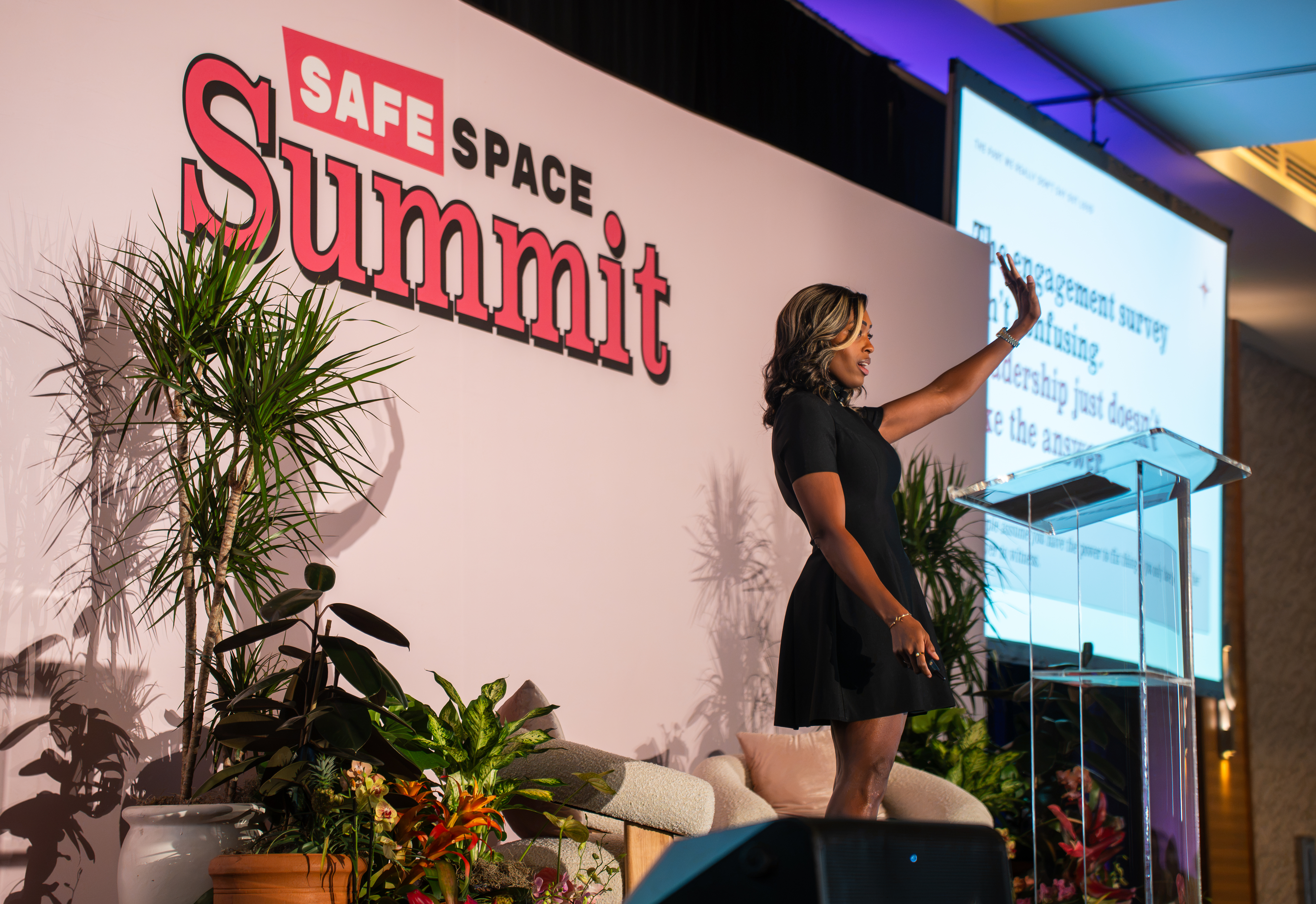
If you've ever sat in a meeting knowing about a layoff, an investigation, and someone's pregnancy, all before lunch, and then smiled and said "doing great, you?"… this keynote was for you.
⭐ Jessica Winder named the thing nobody names: the Trust Tax. The more people trust you, the more you carry. And the more you carry, the fewer places you have to put it down.
A CMO can debrief with another CMO. A CFO can vent to the CFO down the street. HR?
You might be investigating the CEO. There is literally no one in the building to talk to.
And we're supposed to be everything at once:
- Executives want loyalty
- Employees want protection
- Managers want answers
- Legal wants discretion
- The board wants no surprises
Impossible. Pick one. (You can't.)
Then Jess did the bravest thing I've seen on a stage and she gave me permission to share this here! She shared her story about being a Director of HR in active addiction, still performing at a high level, still getting promoted. "I was getting promoted and I was dying." The people around her knew something was off, but she was the HR person. She’s now 6 years sober.
She made a point to say: who helps the HR person?
Her message was simple: if you keep saying "I'm fine" and you're not, reach out. And when burnout tips into not caring anymore, that's not a vibe. That's a warning sign.
Her action item is the one I'd like you to do this week.
✍🏽: HOMEWORK: Build your personal board of directors, people outside work who know what this job is really like:
- A peer: someone you can call when work feels empty
- A truth teller: someone who'll tell you when you're wrong, with nothing to gain
- A professional: a therapist, coach, or counselor
Open your phone. Write one name next to each. If a slot is blank? That's what Safe Space is for.
Because like Jess said: you can't find your safe space in your job.
Go check out Jess's book, The Hidden Gem plus her podcast and newsletter.
The close:Copy anchor linkCopied
Four keynotes. Four totally different topics: AI, storytelling, mistakes, loneliness.
And somehow they all touched on: we can't do this job alone AND we were never supposed to.
Kayshia reminded us that for the first time, HR isn’t the cleanup crew. We’re standing at the front.
Tara told us to know our own story.
John told us to stop carrying grudges (and to ask for the parole time).
Jess told us to fill our board of directors.
I said it on stage and I'll say it again here: we cannot do this job with out each other and finding YOUR people can be life changing.
So whether you were in Huntington Beach or reading this from your desk between back-to-backs, come find your people in Safe Space?
❤️ Thank you to every speaker, every sponsor, and every single one of you who showed up and got real.
And don't forget you can join us virtually in March! More tracks, more speakers like the ones mentioned here and you can join from ANYWHERE. They'll have to call me miss worldwide.
(HUMAN) RESOURCES
- What does it mean to be "happy" at work
- Warp Agent handles tedious, manual tasks so you can get back to the human work of HR*
- Wth is going on with in-office remote work
- How AI is shaping employment at Anthropic
- My article with Aon helps HR see what’s lurking around the corner*
*These are brought to you by my amazing brand partners
WORK-LIFE BALANCE
- 📚 What I’m reading: Once, Again, Always by Amanda Gaye. Hey so remember how I love fanfics? This was originally a Dramoine (pls google) that got rewritten for trad publishing. So you know it was ON MY NEVERENDING TBR.
- 📺 What I’m watching: Roswell. Shoutout to Jennifer who bonded with me over our love for this early 2000s UPN show. Hot aliens? Sign me up. Don’t make this weird.
- 👋🏽 What I’m obsessing over: My college reunion is coming up soon and they have folks filling out a virtual yearbook and I’m trying to decide how unhinged I should make my entry. What do we think should I just be utterly outrageous?! Could be fun???
SONG OF THE WEEK
🎧 Know that I Know, Lake Street DiveCopy anchor linkCopied
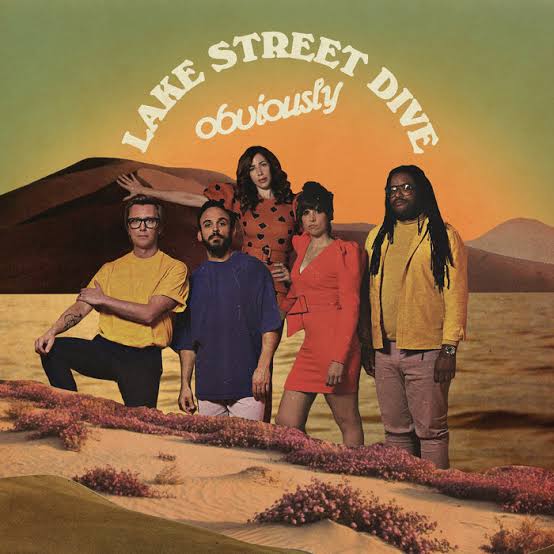
I fee like its been a MINUTED since i've shared some Lake Street Dive. I love this band and have been blessed to see them live a few times. There's just something about the lead singer's voice that just feels like your transprted to another time.
I hope you enjoyed this, please let me know what you think and what other topics you'd love for me to cover. I'm allll ears.
Reminder: Take care of yourself and know that I support you.